
Singapore SME owners rarely start looking for a card machine because they enjoy comparing terminals. They start because the existing device freezes during the lunch queue, settlements arrive later than expected, or a provider's invoice contains fees nobody explained. A café owner such as Priya, running a 40-seat business in Tiong Bahru, may have two quotes open on the counter and still have no clear answer to the question that matters: what will this setup cost next quarter?
The right choice isn't the machine with the largest screen or the lowest promotional rate. Singapore's card payments market is substantial and still expanding, with total card payments reaching S$148.909 billion in 2024 and rising to S$153.164 billion in the next reporting period, according to MAS retail payment statistics. The best card payment machine is the one that supports the merchant's workflow, protects daily cash flow and keeps checkout moving when the shop is busy.
Most SME owners make the same mistake at the start. They compare machines as if the decision were about hardware, then discover that the expensive part sits in the merchant agreement, settlement timetable and support process.
Priya's two quotes may look straightforward. One has a lower headline rate, while the other includes a smart Android terminal with more features. Neither quote answers whether the rate has a floor, whether a monthly minimum applies, how wallet acceptance is activated, or who responds when a transaction fails during a Saturday lunch service.
The headline-rate trap catches merchants who choose the lowest percentage before checking the conditions. A low rate may apply only to selected cards, a limited promotional period or a minimum monthly volume. A merchant needs the effective cost at realistic trading volume, not the most attractive number on a sales sheet.
The brochure trap makes a polished terminal look more reliable than it has proved itself to be. A glossy specification sheet can't show how the device behaves when the queue is long, the Wi-Fi is unstable or staff need to retry a declined payment without slowing the next customer.
The acceptance-list trap creates false confidence. “All major cards accepted” doesn't necessarily explain whether Apple Pay, Google Pay, PayNow, SGQR or other wallet workflows are enabled correctly on the merchant account. A terminal can have the technical capability while the merchant setup still lacks the relevant configuration.
Practical rule: A terminal earns its place on the shortlist only when the provider can explain its cost, settlement timing, wallet configuration and failure support in writing.
These mistakes aren't unique to cafés. Retailers, salons, clinics and fitness studios can all buy a machine that appears suitable but creates friction at the point of payment. The practical test uses five criteria: total cost of acceptance, settlement speed, connectivity reliability, payment-method coverage and local service quality.
Those criteria turn a confusing product comparison into an operating decision. They also reveal why the cheapest-looking machine can become the most expensive choice after downtime, delayed funds and unplanned charges are included.
For a Singapore SME, the best card payment machine is the one that performs reliably across an entire trading day at a cost the business can forecast. It needs to handle the cards and wallets customers typically use, settle funds in a timeframe that fits purchasing and payroll cycles, and give staff a simple path when a transaction fails.
Singapore has already moved beyond basic card acceptance. Visa reported that 97% of Singapore consumers used card payments, while 82% used cash and 82% used contactless cards in its consumer study. Visa also reported that contactless penetration had crossed 95%, with 89% of contactless users paying that way at least weekly and 41% doing so at least four times a week in the same study, as detailed in Visa's Singapore contactless payments coverage.
That behaviour changes the buying standard. A machine that technically accepts cards but makes customers wait for a connection, requires staff to repeat taps or fails to process a mobile wallet is not fit for a busy Singapore counter.
A merchant can test every candidate against five practical questions:
MAS notes that Unified Point of Sale terminals accepting major debit and credit brands through a single interface have been widely deployed in Singapore since 2017. That history supports a clear conclusion: multi-scheme acceptance is a baseline expectation, not a premium feature that should distract from settlement, pricing or service.
A useful shortlist puts the criteria beside one another instead of ranking hardware features in isolation. The following matrix gives each issue a direct operational test.
| Criterion | What it measures | Why it matters for SMEs |
|---|---|---|
| Total cost of acceptance | The complete cost of processing and operating the terminal | A low advertised rate can become expensive after minimums, pass-through fees and support charges |
| Settlement speed and timing | When cleared funds reach the nominated business account | Predictable payouts help merchants plan stock, wages and supplier payments |
| Reliability and connectivity | How consistently the device connects and completes transactions | A failed payment during a queue costs time, sales opportunities and staff attention |
| Wallet and scheme support | Which cards, contactless methods, wallets and local payment rails work | Customers expect the payment methods they use to work without manual workarounds |
| Local service quality | Support availability, response process and equipment replacement | A fast escalation path limits disruption when the device or account fails |
A retailer with steady card volume may favour a predictable blended structure. A seasonal business may value flexibility and fewer fixed commitments. The correct comparison uses realistic monthly volume, average ticket size, card mix and expected wallet usage rather than a promotional example.
A business that replenishes stock frequently has different needs from a clinic that invoices less often or a salon that takes deposits in advance. The provider should state the settlement schedule clearly, including the conditions that could delay funds.
A terminal that performs well in a provider demonstration may struggle in a basement clinic, a high-rise shop or a busy food outlet with congested Wi-Fi. Testing the actual counter, service area and backup connection is more useful than reading a general connectivity claim.
Singapore's payment ecosystem includes cards, contactless wallets and local transfer methods. PwC reported digital payments adoption at 92.0% in 2025, while its Singapore payments discussion identifies tokenised mobile-wallet card payments, PayNow, FAST and SGQR as routine parts of retail payments. Those findings are summarised in PwC Singapore's digital payments reporting, where available market context should be checked against the provider's current terms.
The criteria work as a single filter. A terminal with excellent acceptance but poor settlement may fail a cash-sensitive café. A low-cost device with weak local support may fail a clinic that cannot afford payment disruption. The shortlist should contain only machines that pass all five tests at the same time.
Singapore merchants generally encounter two broad pricing approaches. Blended flat-rate pricing combines processing costs into a simpler rate that is easier to forecast. Interchange-plus pricing separates the underlying card costs from the provider's margin, which can offer more transparency but makes the final amount less predictable.
Neither structure wins automatically. A blended quote can suit a small business that values budgeting simplicity, while interchange-plus can suit a merchant with a payment mix that makes the underlying costs attractive. The effective rate matters more than the label.
Some sales discussions use a low introductory rate that later changes. A merchant should ask when the quoted rate expires, what replaces it and whether the revised price applies to every transaction type. The same scrutiny belongs on payment-organisation fees, monthly minimums, chargeback handling, PCI-related charges, statement fees and equipment costs.
| Quote Line Item | What It Is | Typical Range | Impact on Effective Rate |
|---|---|---|---|
| Processing rate | The stated charge applied to eligible transactions | Varies by provider, card mix and agreement | Directly affects every accepted payment |
| Monthly minimum | A minimum processing commitment or account charge | Varies by agreement | Raises the effective rate when volume is low |
| Pass-through fees | Costs from payment organisations or schemes | Varies by transaction and card type | Adds charges outside the headline rate |
| Chargeback fee | An administration charge when a payment is disputed | Varies by provider | Increases cost during disputes, even if rare |
| PCI or compliance fee | A charge connected to payment-security administration | Varies by agreement | Adds a recurring or conditional cost |
| Statement fee | A charge for account reporting or statements | Varies by provider | Matters more when the account has several small charges |
| Terminal rental | A recurring fee for use of the device | Varies by hardware and contract | Increases fixed operating cost |
| Terminal purchase | An upfront payment for ownership | Varies by device and terms | Moves cost forward and affects repair responsibility |
A worked comparison should use the merchant's own figures. For instance, a café processing a stated monthly volume should calculate the blended charge, every fixed fee, every pass-through item and any minimum that applies in a weaker month. The exercise may show that a higher-looking interchange-plus offer costs less after all charges, or it may show that a simpler blended quote is safer for budgeting.
The commercial model also affects exit risk. Rental, outright purchase and free-on-roll arrangements can assign repair, replacement, return and de-commissioning costs differently. A merchant should request those obligations before accepting the terminal.
For a plain-English review of common traps that appear in “free” equipment offers, the free reader pitfalls for owners resource provides a useful checklist. Merchants comparing pricing structures can also review this explanation of blended rate versus interchange-plus pricing in Singapore.
A quote isn't final until these line items appear in the merchant agreement or fee schedule. Verbal reassurance doesn't protect cash flow.
Acceptance lists are easy to market. Daily settlement and reliable wallet processing are harder to see, yet they affect the business every trading day.
A provider may offer T+1 or T+2 settlement, while another agreement may provide a faster arrangement depending on the merchant profile and operational requirements. The important question isn't which label sounds better. It is when a Friday payment becomes usable money, whether weekends change the timing, and whether the stated schedule applies to every accepted payment method.
A delay can force a merchant to use existing cash for stock, supplier payments or operating expenses while card takings remain unsettled. That makes settlement a working-capital decision, not an administrative detail. Providers should state the timetable in writing rather than describing funds as “fast” or “next day” without defining the banking conditions.
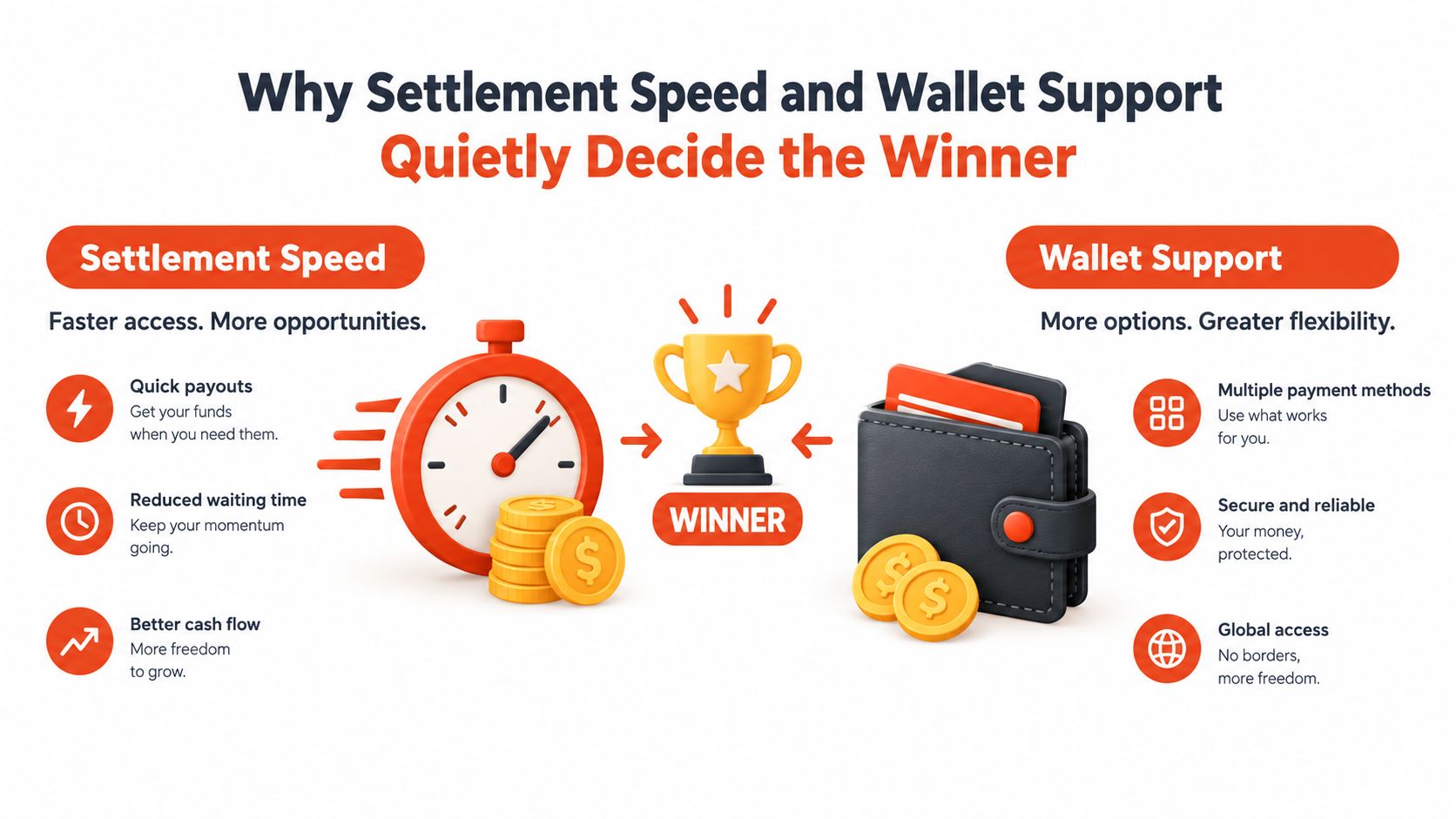
A terminal can be technically capable of processing a wallet while the merchant account remains incorrectly configured. The shortlist should therefore separate supported in principle from working at the till.
The provider should confirm the status of:
The merchant should ask whether each method is enabled on the merchant ID, whether separate onboarding is required and how refunds appear in reports. The provider's card payment settlement guidance can help merchants frame the settlement questions, but the signed agreement remains the controlling document.
Connectivity is the third quiet decider. A food outlet may need Wi-Fi with a dependable 4G fallback, while a mobile operator may need the reverse. A clinic in a basement unit should test the actual counter, and a café should run transactions during its busiest service rather than during a quiet demonstration.
A terminal that accepts every method in a brochure but fails at the point of sale is less useful than a narrower setup that completes the payments customers actually make.
A merchant doesn't need a long product trial to expose most weaknesses. A focused 45-to-60-minute assessment can reveal whether the provider understands the operating risk or is relying on a sales deck.
The provider should send the full merchant agreement, fee schedule and service-level terms in one readable document. If the sales representative can provide only a brochure, the evaluation hasn't started properly.
The document review should answer five questions:
A provider that avoids direct answers before onboarding is unlikely to become more transparent after installation.
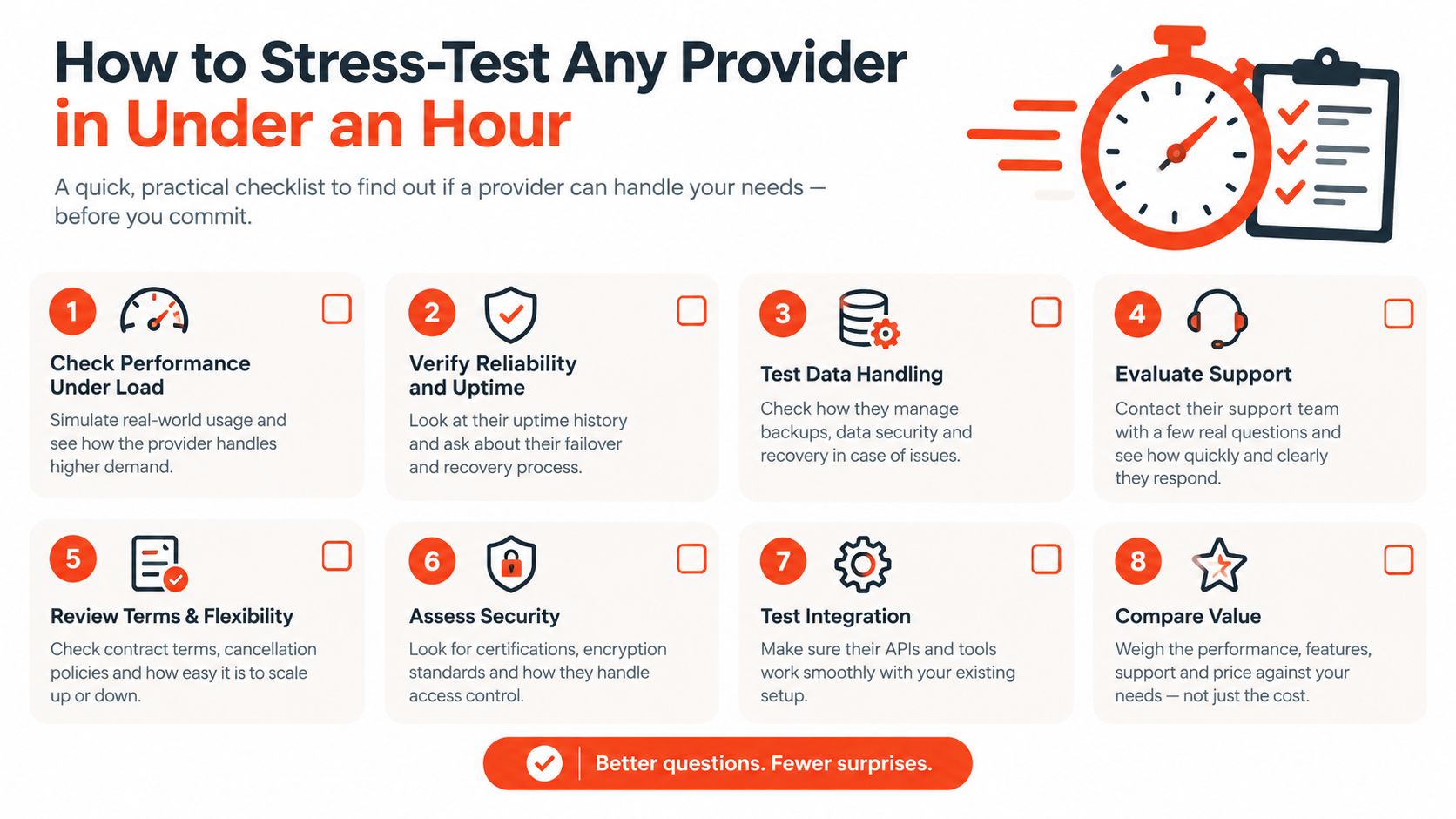
The merchant should process a small set of genuine test transactions across the relevant card schemes and at least two relevant wallet methods. Staff should record the authorisation time, any decline message, the retry process, the receipt outcome and the way each payment appears in the reporting portal.
The test should happen at the actual service counter. If the machine will travel between tables, rooms or outdoor areas, those locations deserve testing too. A demonstration on a provider's stable network says little about a high-rise shop, basement treatment room or crowded lunch queue.
Within the next business discussion, the provider should confirm settlement timing, onboarding dates, terminal ownership terms and the process for cancelling or changing the setup. Rental, free-on-roll and purchase arrangements can shift responsibility for repairs, returns and de-commissioning.
The best stress test is a written answer followed by a live transaction. Anything that exists only in a sales conversation should be treated as unconfirmed.
The right terminal profile follows the way customers move through the premises. A boutique retailer needs a dependable checkout at a fixed counter. A café may need staff to take payment away from the till. A clinic may care more about deposits, refunds and booking-system records than about a flashy display.
Singapore's POS environment is dense, with one market analysis citing 254,469 POS terminals in 2021 and projecting 316,695 by 2024, equivalent to about 44 POS terminals per 1,000 people in 2021, as reported in this Singapore card-reader market analysis. That density reinforces the need to match the device to the workflow rather than treat any terminal as interchangeable.
| Business Type | Transaction Pattern | Preferred Terminal Form | Key Capability |
|---|---|---|---|
| Boutique retail | Counter sales with bursts of queue activity and occasional returns | Countertop or compact handheld terminal | Fast contactless checkout and clear refund handling |
| Café or restaurant | Repeated small payments, queue pressure and possible table service | Portable terminal, with countertop support where needed | Stable connectivity, battery endurance and flexible payment location |
| Salon or spa | Deposits, appointment payments, balances and cancellations | Portable or smart terminal near reception | Reliable receipts, refunds and booking-system compatibility |
| Clinic | Registration payments, deposits, repeat visits and administrative refunds | Countertop or portable terminal | Clear reporting, secure processing and straightforward reconciliation |
| Gym or fitness studio | Membership payments, class bookings and front-desk purchases | Smart terminal at reception, with mobile capability if needed | Payment records that match bookings and recurring customer activity |
A boutique retailer normally benefits from a single-screen countertop unit if every transaction occurs at one till. A second mobile device may be unnecessary unless staff take payment on the shop floor or open a temporary selling area.
A café has a different constraint. Counter-only service can work with a fixed unit, but table service, queue overflow or outdoor seating makes portability valuable. Battery life and reconnection behaviour matter because a device that needs constant charging becomes a staff-management problem during service.
A salon or clinic should examine how the terminal connects with booking and customer records. Deposits, partial payments, refunds and no-show charges create more administrative work than a simple retail sale, so reporting and reconciliation deserve as much attention as tap speed.
A gym or fitness studio often needs a clear view of membership-related payments and front-desk purchases. The machine should support the studio's actual payment process without forcing staff to duplicate entries across disconnected systems.
Merchants can compare their operational needs with this guide to POS machines for small businesses, then discard profiles that don't resemble the premises. The useful question is simple: where does payment happen, how often does the queue form, and what must staff do immediately after approval?
A merchant can reduce the shortlist to four pass-or-fail checks. Each answer should come from the written quote, a live test or a reference site, not from a feature list.
Cost check: Does the provider show the full effective cost at realistic monthly volume, including fixed charges, pass-through fees, chargebacks and equipment? A pass requires a complete written schedule with no unexplained line items.
Cash-flow check: Does the settlement timetable match the business's purchasing and operating cycle? A pass requires the provider to state when funds arrive for ordinary days, weekends and relevant banking conditions.
Customer-payment check: Do the card, contactless, wallet and local payment methods match the methods customers already use? A pass requires live confirmation that the methods are enabled on the merchant account, not merely listed as technically supported.
Reliability check: Has the terminal worked at the actual premises, and has a local reference confirmed the support process? A pass requires a practical escalation route, a defined replacement process and evidence that the provider can support the merchant's operating hours.
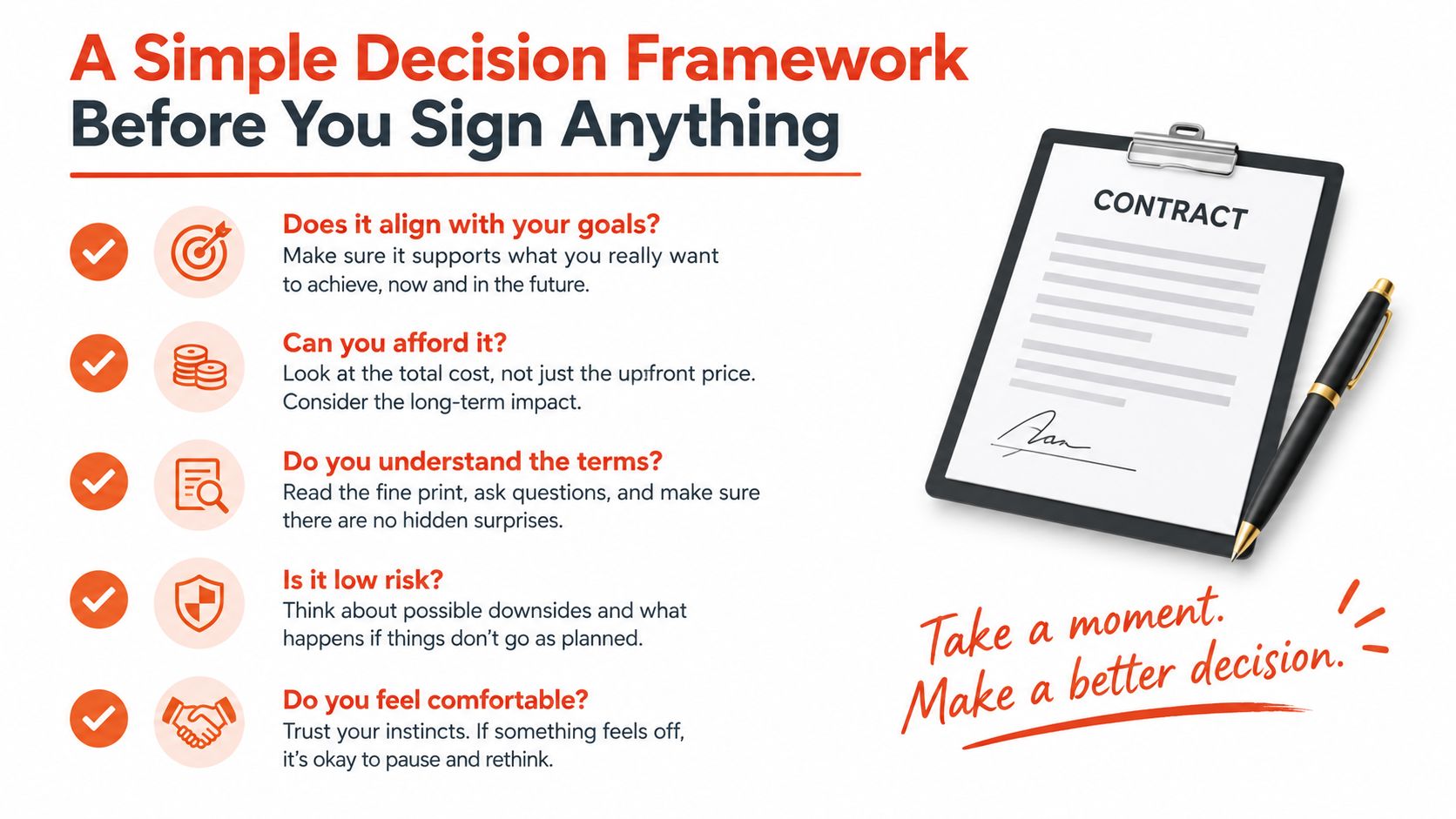
If two providers pass equally, the stronger choice is the one whose merchant support number a real Singapore SME has called and found useful. That final check cuts through glossy brochures because it tests the relationship that matters after installation.
Sambapay offers Singapore SMEs modern POS terminals for in-store card acceptance, selected digital wallets and settlement options from as early as T+1, subject to the merchant agreement. Merchants comparing the best card payment machine for their workflow can review the available setup and request a discussion through Sambapay.