
The landlord has offered a short lease on a vacant unit. The boutique owner has stock ready, an online audience and a launch date in mind, but still doesn't know whether passing shoppers will become paying customers. A permanent outlet feels premature; a temporary shop looks manageable.
That's the appeal of a pop up store, provided the operator treats it as more than a display. The key test is whether the business can open legally, serve customers efficiently and collect enough usable cash to justify the next move.
A boutique choosing between a short-term unit and a conventional lease isn't just choosing different rental periods. The owner is deciding how much uncertainty the business can afford before committing to a location, assortment and operating model.
An online following doesn't establish whether customers will travel to a particular centre. Equally, a busy corridor doesn't prove that its shoppers want the products on offer. A temporary shop lets the operator examine those questions through actual purchases rather than expressions of interest.
Singapore's pop-up movement developed alongside rising retail vacancies: the islandwide vacancy rate increased from 4.5% at the end of 2013 to 5.8% in 2014 and 7.2% at the end of 2015, while CapitaLand Mall Asia reported in March 2016 that pop-ups accounted for approximately 1% of tenants across its 18 Singapore malls, following three to four years of growing visibility, according to contemporary reporting on Singapore's pop-up growth.
That history matters because the format addressed a practical problem on both sides of the lease. Landlords had empty space to activate, while merchants wanted physical exposure without immediately accepting a conventional long-term commitment.
The arrangement didn't remove commercial risk. It changed the size and duration of the commitment, giving retailers a way to gather evidence before making a larger decision.
Commercial rule: A temporary lease is useful when it buys an answer to a specific business question, not simply a cheaper-looking shopfront.
Different operators need different answers. A fashion boutique might need to establish which products customers will try on but won't buy online. A café concept might need to establish whether the surrounding audience wants its offer at the intended trading hours.
Before discussing décor, the operator should write a clear hypothesis:
A temporary activation shouldn't be mistaken for automatic permission to deliver every type of service. A salon, clinic or food concept needs a format appropriate to its activities, rather than a retail template copied without scrutiny.
The useful outcome isn't necessarily a permanent outlet. It may be a narrower assortment, a different location or a decision to remain online. A well-defined test can make any of those outcomes commercially valuable.
The opening date must follow the approval route, not the other way round. A landlord's agreement establishes access to the space; it doesn't establish that every proposed activity or structure can proceed.
Start by classifying both the location and the activity. A mall unit, state-land activation, public road, park and temporary structure shouldn't share an assumed approval checklist. Food preparation, alcohol, entertainment and regulated goods also need separate scrutiny.
The site decision should follow a clear approval sequence.
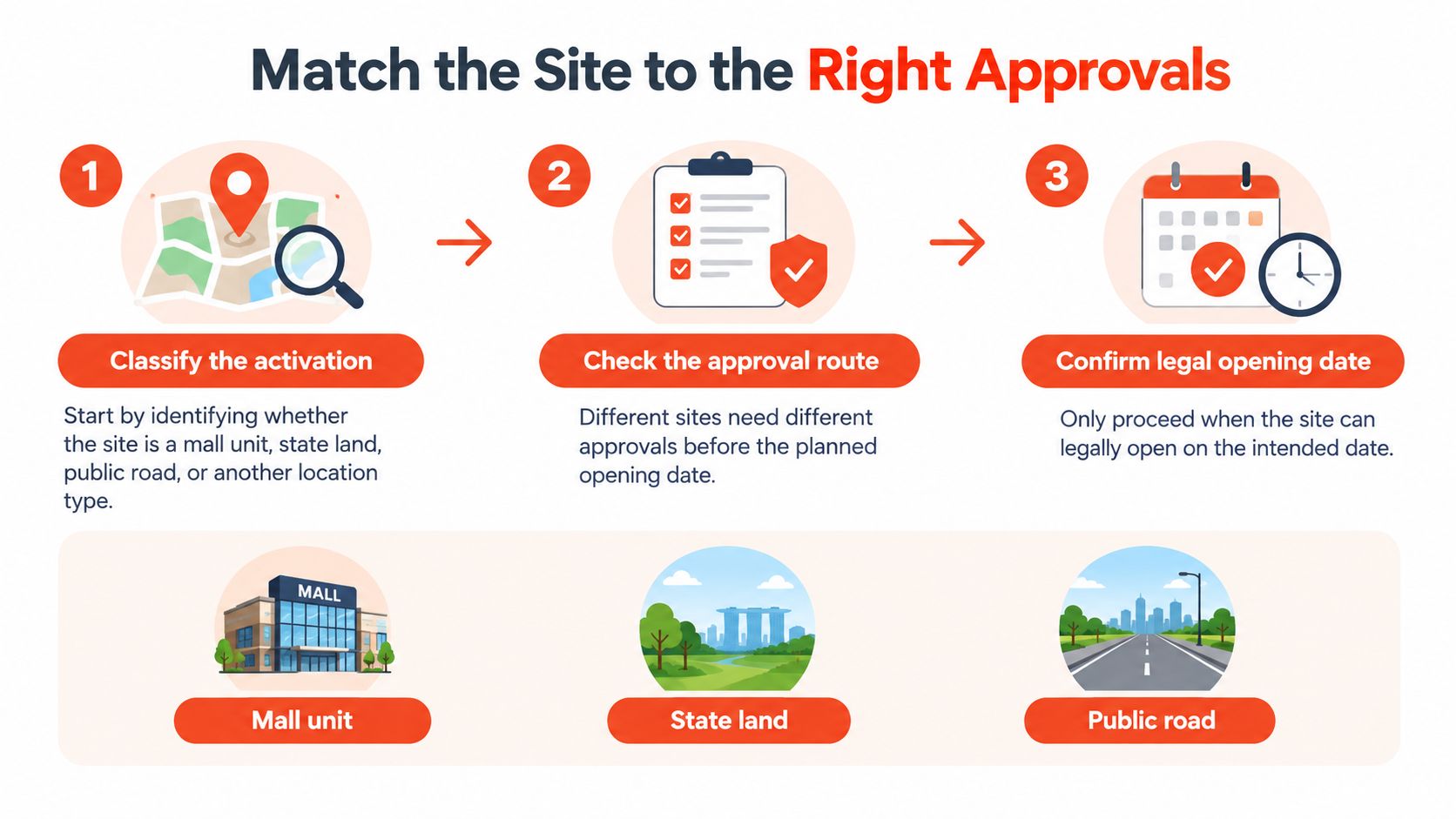
For an Orchard Road pedestrian-mall activation on state land, the Non-Renewable Temporary Occupation Licence takes about one month after complete documents are received, and incomplete submissions aren't accepted, according to the Singapore Tourism Board's licence guidance.
Temporary buildings or structures can require BCA's two-stage process, professional-engineer involvement and submission at least three weeks before construction; event activities can also trigger additional approvals, as outlined in the National Arts Council's event-licensing guidance-and-freelancers/event-licensing).
A workable sequence is:
The sequence matters because a revised footprint can affect more than display furniture. Moving storage or adding an activity may change the circulation plan, electrical requirements or approval scope.
The calendar should name the application owner, required documents, submission date, dependencies and written decision. Supplier bookings should distinguish between provisional reservations and commitments that cannot be recovered if approval takes longer.
For regulated dealers, a location used for fewer than 90 days in a year generally doesn't require registration as an additional place of business, while longer use triggers registration and notification obligations under the applicable guidance. That exception isn't a general exemption for temporary retailers or their other activities.
Common mistakes are avoidable: treating mall consent as universal clearance, treating an incomplete submission as time already served, and designing an experience that obstructs emergency access. An attractive layout isn't an acceptable reason to narrow required circulation.
The practical deliverable is a dated calendar supported by written decisions. A mood board can wait until the proposed shop has a credible route to opening.
An approved footprint still needs an assortment that can be sold, replenished and packed without turning the shop into a storeroom. The strongest starting point is a deliberate edit: products with established demand, alongside products chosen to test a clear hypothesis.
Singapore's earlier examples show different uses of that approach. Comme des Garçons opened its Temple Street guerilla store in 2004, followed by three additional Singapore locations over four years; Megafash reported physical-store revenue growth of about 10% month on month from July to November 2015, then 50% from November to December, with 30% of website buyers between December 2015 and early 2016 using a pop-up discount code; Naiise began with a 2014 pop-up, including a 3,000-square-foot Orchard Central activation, before expanding into permanent outlets, according to this account of Singapore's pop-up retailers.
Those examples aren't forecasts for another shop. They illustrate why assortment, physical discovery and online follow-through deserve a deliberate test.
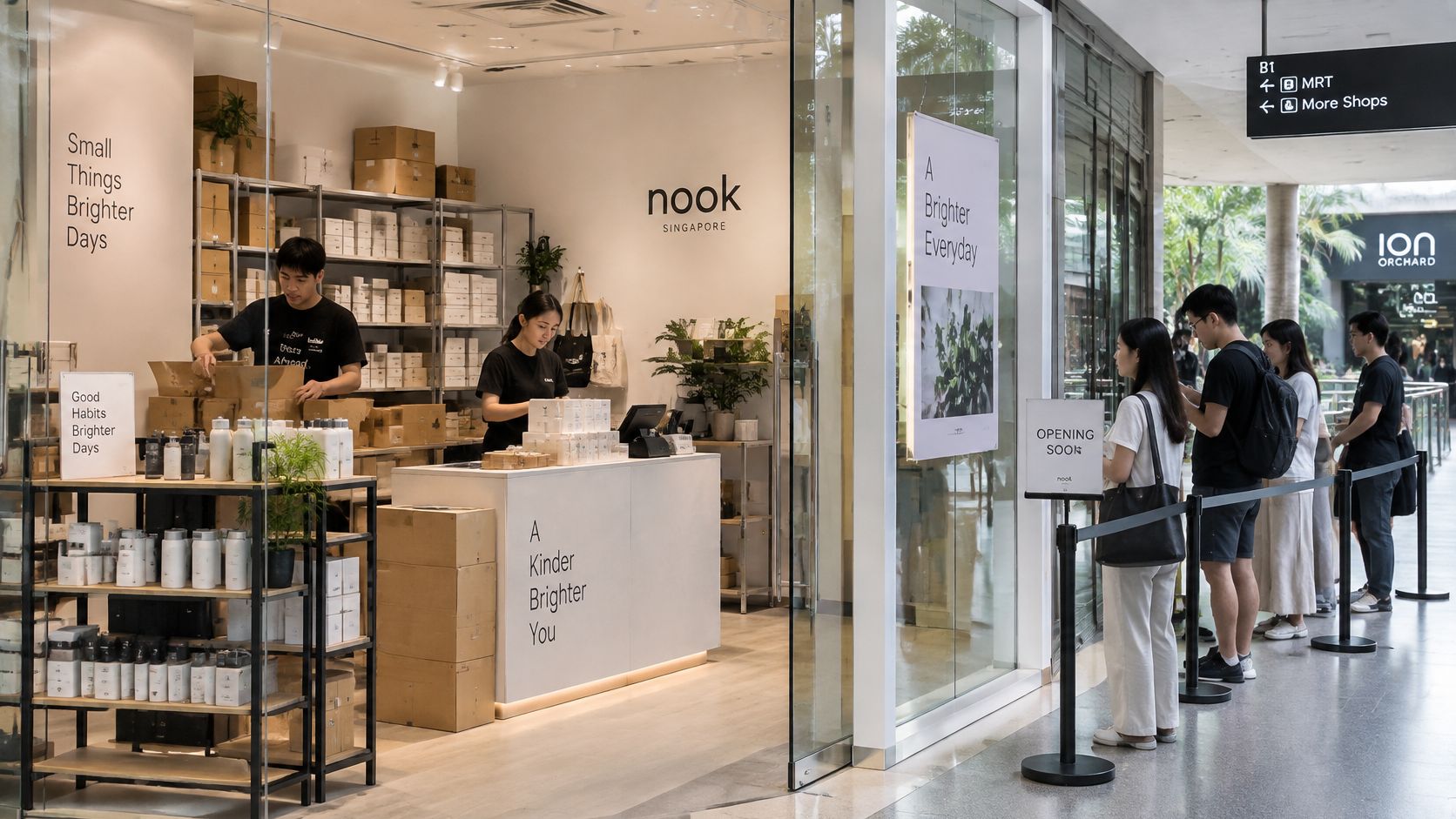
Give each product a reason to occupy space. A hero item may attract attention, a familiar bestseller may establish demand, and a complementary item may help test basket-building.
Fixtures should help customers compare products. For accessories, Dirt Cheap Headwear's guide to how to style event hat displays provides a useful merchandising reference, but display choices still need to fit the approved footprint.
Keep a recognisable customer path, a visible offer and a counter position that supports greeting, packing and checkout. A compact layout should reduce unnecessary movement, not force a staff member to abandon a customer whenever packaging is needed.
The small-business POS selection guide can support the counter decision. Device placement should be assessed alongside bag storage, receipt handling and the handover of paid goods.
Build the roster around expected peaks rather than distributing staff evenly across every trading hour. Assign responsibility for stock counts, refunds, replenishment requests and closing cash-up, even when the same person handles several duties.
The run sheet should record opening checks, product priorities, role ownership, escalation contacts and closing tasks. Staff shouldn't have to invent a refund process while a queue waits.
A failed tap is more serious when the shop has little time to recover the sale. The payment decision should therefore cover acceptance, connectivity, settlement and support, rather than starting and ending with the terminal's appearance.
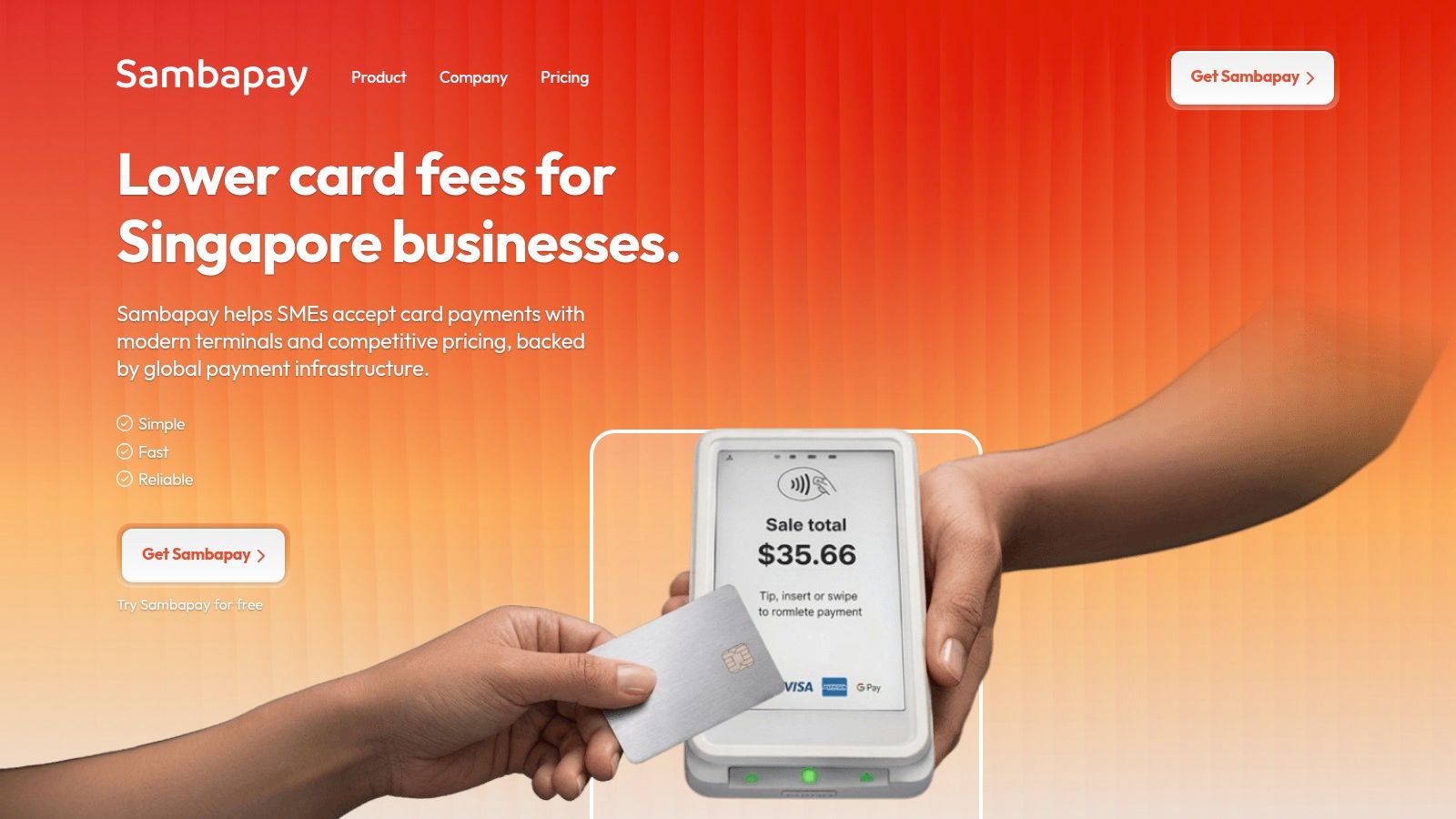
The screenshot provides a reference point for the in-store payment option under consideration.
| Setup | Best for | Acceptance to confirm | Settlement and support |
|---|---|---|---|
| Countertop or mobile Android terminal | Fixed kiosk with payments taken mainly at the counter | Enabled card schemes and wallets on the merchant account | Written payout schedule; provider contact and staff member responsible for the device |
| Portable terminal | Table service or an event floor where staff move | Supported methods, battery readiness and connectivity throughout the trading area | Merchant-agreement timing; provider troubleshooting route and charging responsibility |
| Backup device with a written fallback procedure | Continuity when the primary device or connection fails | Backup activation, available connection and approved alternative methods | Confirm whether the backup uses the same account; name the escalation owner and reconciliation process |
Sambapay is a Singapore in-store option for SMEs, offering PAX Android terminals with Visa, Mastercard, American Express, JCB and CUP acceptance, plus selected wallets including Apple Pay, Google Pay, Alipay, GrabPay and PayNow, as described in its cashless payment offering.
The provider describes processing on global acquiring infrastructure with 3D Secure and SSL safeguards, blended pricing based on industry, ticket size and volume, and local onboarding support. Those safeguards shouldn't be treated as permission to improvise an offline card process.
Standard setups are offered without monthly terminal rental, cancellation fees or a binding period. The operator should still obtain written confirmation of the selected configuration, accessories, enabled payment methods and support arrangements before accepting the quote.
A terminal that powers on hasn't passed an operational test. Staff should rehearse an approved transaction, a declined transaction, a refund and the response to a lost connection.
For orders completed after the customer leaves, The Advertising Suite's guide to secure SMS payment links offers a reference for a separate follow-up workflow. Such a route should only be used through an approved service with clear order identification, not as an improvised substitute for a failed card payment.
The accompanying video can support the terminal review.
Before opening: Confirm who answers the support call, what staff do during a connection failure and how a refund appears in the reconciliation report.
Payment approval rate belongs beside queue abandonment and stock availability on the operating dashboard. For wider context, Shopify's pop-up shop guide places successful storefront conversion at roughly 20%–40% of walk-ins, but that's a reference benchmark, not a guaranteed Singapore result.
Promotion should make the temporary shop easy to visit. Publish the trading dates, location, opening hours and a concrete reason to attend, rather than relying on a vague launch announcement.
Landlord channels, existing customer communications and scheduled social posts can support a focused campaign. A social media scheduler from iHatePosting is an option for organising date-specific posts; the operator still needs to check that every published detail matches the confirmed trading plan.
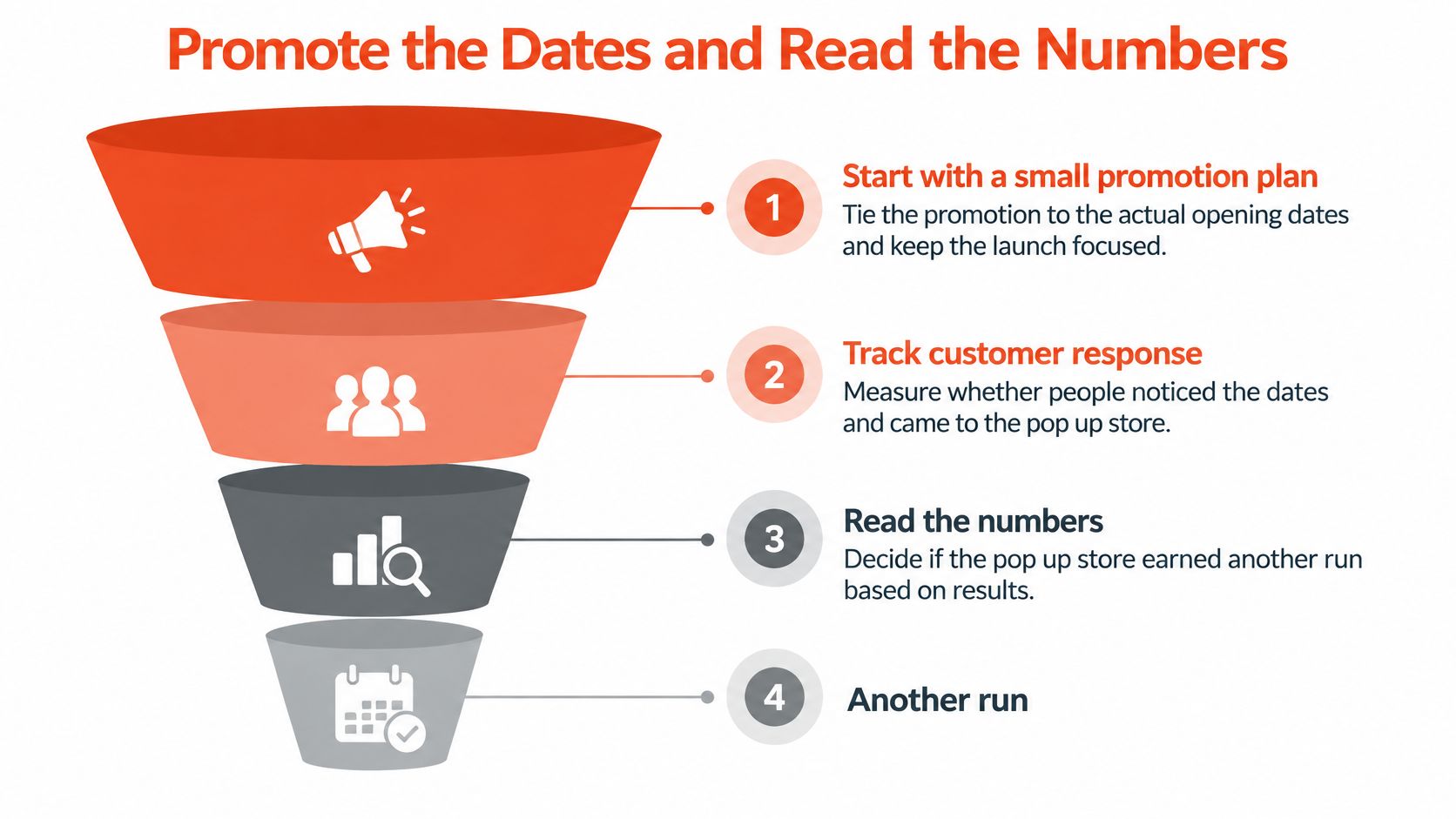
Use unique campaign identifiers for QR codes, offers and messaging opt-ins. A named time block for a demonstration or product consultation can create a clearer visit proposition than an offer available without distinction throughout the event.
The measurement sheet should capture:
Where comparable permanent-store days exist, use them as a baseline rather than assuming all event traffic is incremental. Without a baseline, label the activation as an initial test and avoid presenting the result as a proven improvement.
Calculate break-even purchasers by dividing fixed activation costs by contribution per purchaser. To estimate break-even visitors, divide that purchaser requirement by the expected conversion rate; ignoring conversion would confuse buyers with everyone who enters.
Review the dashboard hourly and change signage, sampling or offer mechanics in defined time blocks. Changing everything simultaneously makes it difficult to identify which adjustment helped.
Reconcile POS totals, inventory movements and lead records daily. After closing, keep same-day revenue separate from attributable later orders, and distinguish new-customer repeat purchases from existing customers merely shifting their usual purchase date.
A busy shop is evidence of attention. Another lease requires evidence of contribution.
The wider market shouldn't be treated as guaranteed support: Singapore retail sales grew 0.6% year-to-date through April 2025 after a 2.1% decline in the previous year, according to Cushman & Wakefield's Singapore retail market report.
That context favours a category-specific test over a broad claim that experiential retail will sell itself. Judge the activation after rent, staffing, permits, payment costs, discounts, wastage and the treatment of unsold stock.
Unsold inventory shouldn't automatically be written off if it remains saleable elsewhere. It should, however, be separated from cash already recovered and assessed for its actual remaining value.
The closing decision should follow the trading evidence, not the launch photographs. Contribution margin, conversion by daypart, approval rate and captured repeat purchases provide a more useful basis for deciding whether the format deserves more capital.
A profitable activation can still depend on conditions that won't repeat. An unusually favourable site arrangement or a heavily discounted offer should be identified before the result becomes a permanent-outlet forecast.
Stopping isn't necessarily a failed exercise. It can be the commercially sensible result of testing a concept before taking on a larger commitment.
Sales totals don't establish how much cash is available to reorder stock. The operator needs deposits matched against card receipts, refunds and payment charges, with unsettled amounts clearly identified.
Settlement can begin as early as T+1, depending on the merchant agreement and operational requirements, as described in the provider's card payment settlement guidance. The agreed schedule, rather than the earliest advertised option, belongs in the restocking forecast.
A known transaction fee also helps distinguish gross sales from usable contribution. The repeat decision should include whether replenishment can be funded from available receipts or needs additional working capital.
The cheapest-looking activation isn't automatically the lowest-risk choice. The approval calendar should remain part of the next-site assessment, particularly when the proposed format changes from an indoor kiosk to outdoor structures, food handling, alcohol or entertainment.
Before requesting the next installation, assemble the site type, confirmed trading dates, expected ticket size and monthly card volume. Those details make the payment quote and deployment discussion specific enough to support an actual opening.
Sambapay offers PAX Android terminals, in-store card and selected wallet acceptance, and local onboarding support for Singapore SMEs planning a pop up store. Visit Sambapay with the site details, trading dates, expected ticket size and monthly card volume to request a blended quote and an installation slot before the first customer arrives.