
On a packed Friday night, the weak point in many dining rooms isn't the kitchen. It's the last step. A server drops the bill, a customer reaches for a card or scans a QR, the terminal hangs for a moment, staff switch devices, someone asks which code to use, and the queue at the cashier grows. That delay looks small until it repeats across a full service.
That's why choosing a restaurant POS in Singapore can't be treated as a simple hardware purchase. In F&B, checkout is part of operations. It affects table turnover, staff stress, end-of-day reconciliation, and when the restaurant receives payment. Most comparison pages focus on features, screen size, or whether the system “supports digital payments”. Restaurant owners usually need a more practical answer: does this setup keep service moving when the room is full, and does it keep admin under control after closing?
Dinner rush exposes every weakness in a payment setup. A terminal that takes too long to wake up, a POS flow that asks too many questions, or a cashier station that forces staff to jump between card and QR acceptance all create the same result. Customers wait, staff rush, and mistakes increase.
In Singapore, that matters even more because cashless payment is already a normal expectation for diners. A restaurant that wants a broad view of how fast this shift has become can look at cashless payment trends in Singapore. The strategic point is simple: payment speed is no longer a convenience feature. It's part of service delivery.
Checkout friction usually doesn't announce itself as a system failure. It shows up as small operational leaks:
Practical rule: In restaurants, the payment journey has to be easier for tired staff than it is for head-office procurement.
A slow kitchen can sometimes recover with prep changes. A slow checkout process is harder to hide because it happens directly in front of the guest. That's why operators should judge any restaurant POS Singapore shortlist using operational criteria first, not brochure features.
A useful restaurant POS evaluation starts with four questions:
Those four issues decide whether the system helps the restaurant or taxes it every day.
Singapore payment acceptance isn't a single-lane problem. It's a dual-rail environment where restaurants need reliable card-present acceptance and broad QR compatibility at the same point of sale. Merchants that treat QR as an afterthought usually end up with extra stands, extra training, and extra confusion.
The volume and behaviour data explain why. MAS retail payment statistics show total card payments reached S$148.9 billion in 2024, with POS credit and charge card payments at S$54.54 billion and POS debit card payments at S$28.52 billion. In volume terms, POS credit and charge card transactions totalled 682 million and POS debit card transactions totalled 853 million in 2024. The same MAS dataset shows the average POS ticket size for credit and charge cards was about S$80. PwC's Singapore overview also reports digital payments accounted for 92.0% of adoption in 2025, reinforcing that electronic in-store acceptance is now standard rather than optional, according to MAS retail payment statistics.
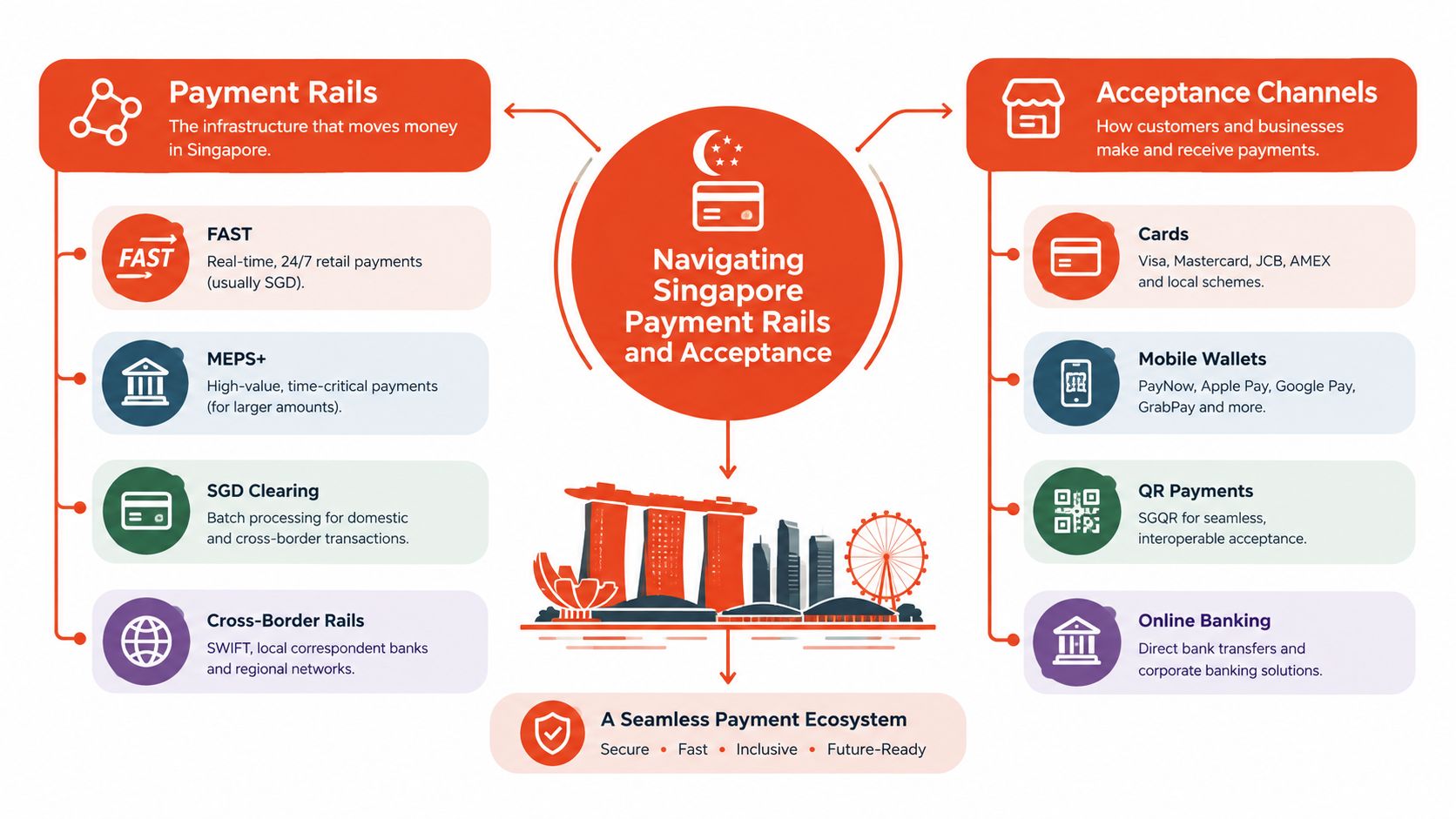
Restaurants sometimes overcorrect towards QR because it feels local and familiar. That's a mistake if card acceptance becomes secondary. Visa's Singapore study found card payments were used by 97% of consumers versus 82% for cash, and more than 95% of Singapore consumers used credit or debit cards for payment. The same study reported 82% used contactless cards, Visa contactless penetration crossed 95%, and 89% of contactless users used the method at least once a week. MAS data cited in the same context also shows 2.286 billion card-payment volumes in 2024 and 1.082 billion in the first half of 2025, as noted in Visa's Singapore payments study.
That pattern matters at the table and the counter. Contactless card and mobile wallet flows are often the fastest option for a guest who already has a card in hand or a phone wallet ready.
Singapore is also structurally QR-first. MAS says more than 239,000 merchants accept payments via SGQR, which means broad QR acceptance is part of everyday checkout design, according to SGQR acceptance information.
A good restaurant setup doesn't force staff to mentally separate “card payment” from “QR payment” as if they belong to different businesses. One basket total should move into one clean payment decision. The more a restaurant relies on disconnected devices, the more likely staff will ask the guest to restart, rescan, or move to another terminal.
For a quick visual explainer, this walkthrough is helpful:
When reviewing a provider, operators should test these points live:
The best payment flow is the one a new part-timer can execute correctly on a noisy Saturday shift.
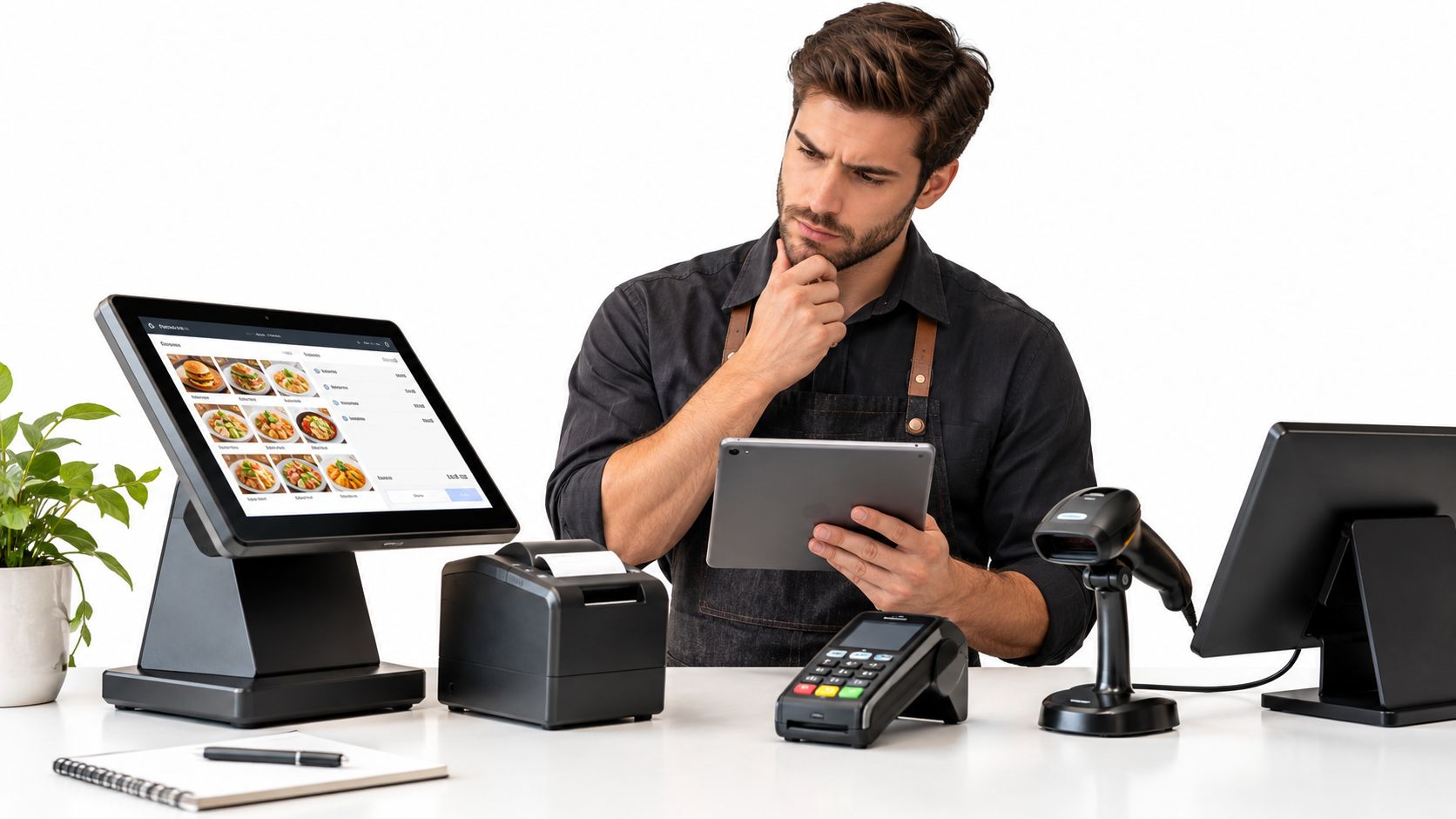
A restaurant terminal doesn't live on a showroom counter. It gets carried between tables, tapped with wet hands, handed to guests, connected through thick walls, and used by casual staff who haven't memorised a manual. Hardware has to fit that reality.
The first question isn't screen resolution. It's whether the device matches service style.
For table-service venues, a portable terminal reduces bill-settlement lag because staff don't need to walk back to a fixed cashier point. For counter-service restaurants and cafés, the terminal needs a stable footprint, quick wake-up behaviour, and enough screen clarity that both staff and guests can follow the payment prompt without verbal coaching. For operators comparing device styles, this guide to a contactless payment terminal is a useful reference point.
The most practical hardware checks are simple:
Legacy-looking hardware often creates hidden training costs. Staff hesitate because the interface feels dated, cluttered, or inconsistent. Newer Android-based terminals tend to reduce that hesitation because the navigation is cleaner and more familiar.
Most vendors demonstrate the successful transaction. Restaurant owners should ask to see the failure states too.
What happens when the guest changes payment method halfway through? What does the screen show if connectivity drops? Can staff reverse a wrong tender selection without calling a manager? The right hardware and interface combination doesn't just process clean payments. It helps ordinary staff recover from messy ones.
A useful terminal is one that prevents panic when something goes wrong.
Restaurant margins are thin enough without payment costs becoming a puzzle. Yet many merchant statements are still built to be hard to read. The issue usually isn't one large charge. It's the stack of small, badly explained charges that make owners unsure what they're paying for.
The commercial structure matters as much as the headline rate. A provider can advertise an attractive entry number and still produce an expensive monthly reality once other layers appear.
Traditional pricing often separates charges across multiple categories. That can include processing components, scheme-related costs, add-ons, terminal charges, statement quirks, and other line items that don't look significant in isolation. The result is poor predictability.
That kind of unpredictability hurts operations in the same way poor rostering does. Restaurant owners dealing with labour stress may recognise the pattern from this guide to avoiding chef staffing gaps. The headline problem looks urgent, but the hidden cost comes from disruption, admin, and rushed decisions.
An independent Singapore SME survey reported that 36% cited data security and fraud concerns, 33% cited integration complexity, and 32% cited slow payouts or settlements as barriers to wider digital payment adoption. The same report said 33% of Singapore SMEs still reported high cash usage, while cards accounted for 72% of Singapore e-commerce GTV in 2024 and are projected to rise to 73% in 2026 and 76% by 2029, according to this Singapore card payments and SME analysis.
For many restaurants, a blended pricing structure is easier to manage because it makes the payment cost more readable. The key benefit isn't just accounting neatness. It's operational clarity. Owners can estimate costs faster, review statements with less friction, and spot anomalies earlier.
A practical explanation of the trade-off appears in this comparison of blended rate vs interchange plus in Singapore.
| Feature | Traditional Multi-Layered Pricing | Transparent Blended Pricing |
|---|---|---|
| Rate visibility | Often split across several components | Usually easier to read as one commercial structure |
| Monthly statement review | More admin-heavy | Faster to check |
| Budget predictability | Can vary in ways owners don't expect | Usually simpler to forecast |
| Staff understanding | Often limited to finance or management | Easier for non-specialists to grasp |
| Negotiation clarity | Headline rate may hide other costs | Commercial discussion is more direct |
Restaurant owners should ask these questions plainly:
One provider in this market, Sambapay, positions itself around transparent blended pricing, no monthly terminal rental for standard setups, and no cancellation fees or binding period for standard commercial arrangements. That doesn't remove the need to compare alternatives, but it does reflect the kind of terms many F&B operators should look for.
Restaurants don't run on sales alone. They run on timing. A strong service means little if the cash from those transactions lands too slowly to support supplier orders, payroll planning, and routine operating spend.
This is one of the most overlooked parts of the restaurant POS Singapore decision. Owners often compare acceptance features in detail, then treat settlement as a back-office technicality. It isn't. It determines how quickly earned revenue becomes usable cash.
When payouts are delayed or inconsistent, the pressure shows up elsewhere. The owner delays replenishment. Finance staff spend extra time matching batches. Managers become cautious about ordering because the account balance doesn't reflect the weekend's trade yet.
The problem isn't always the absolute delay. It's uncertainty. A restaurant can plan around a clear payout cycle. It struggles when the timing feels opaque, statements are hard to reconcile, or different payment rails settle with different logic.
Fast settlement supports practical decisions:
Some providers offer settlement from as early as T+1, depending on the merchant agreement and operational setup. For F&B, that can make a real difference because restaurants buy frequently and operate on constant turnover, not long invoicing cycles.
Cash flow problems in restaurants often start as timing problems, not profit problems.
The best payment partner doesn't just approve transactions reliably. It gets completed sales into the business account on a schedule the operator can work with.
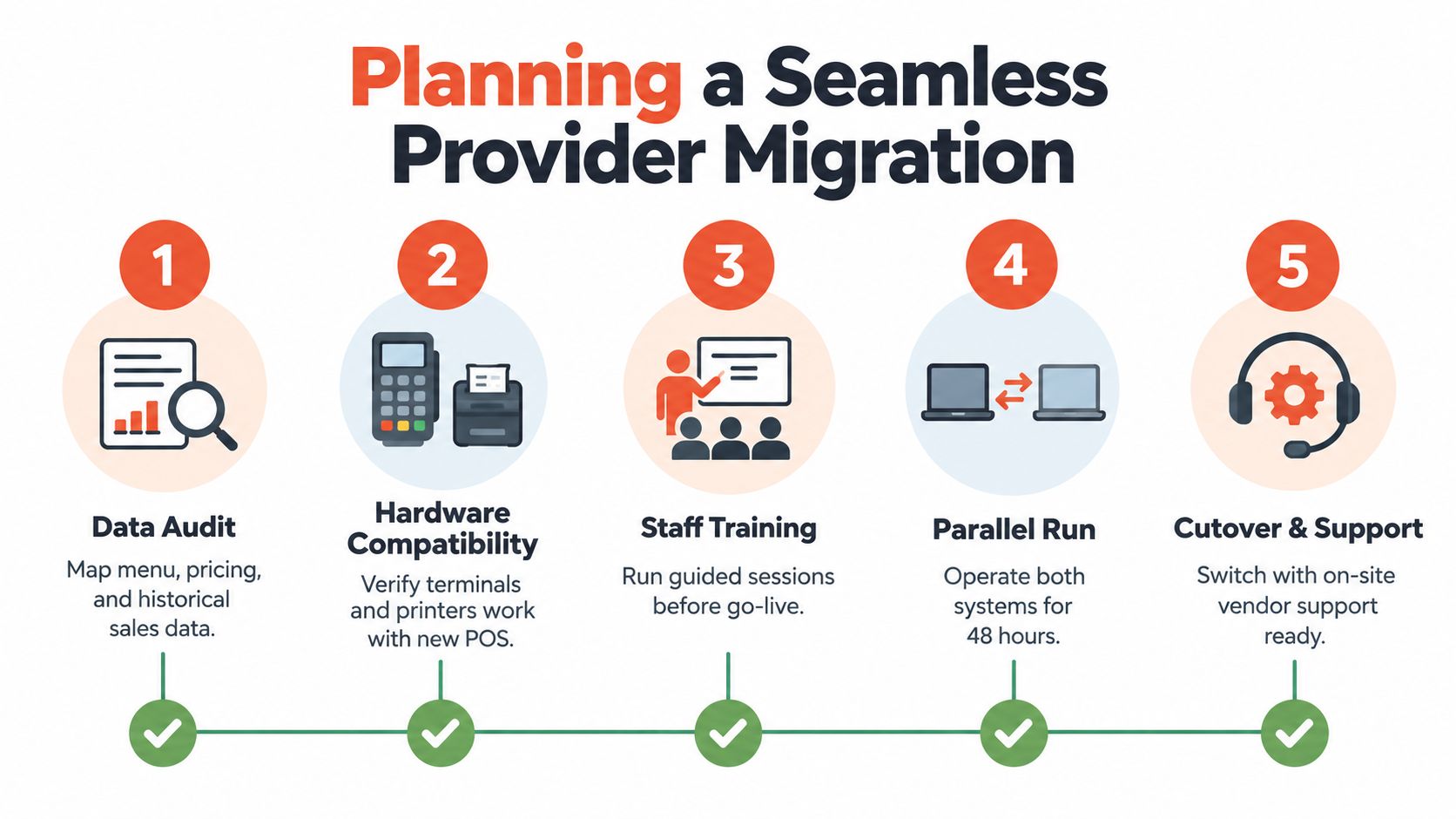
Switching payment providers feels risky because a restaurant can survive a clunky system for a while, but it can't survive downtime during service. Migration has to be treated like an operational project, not a courier delivery.
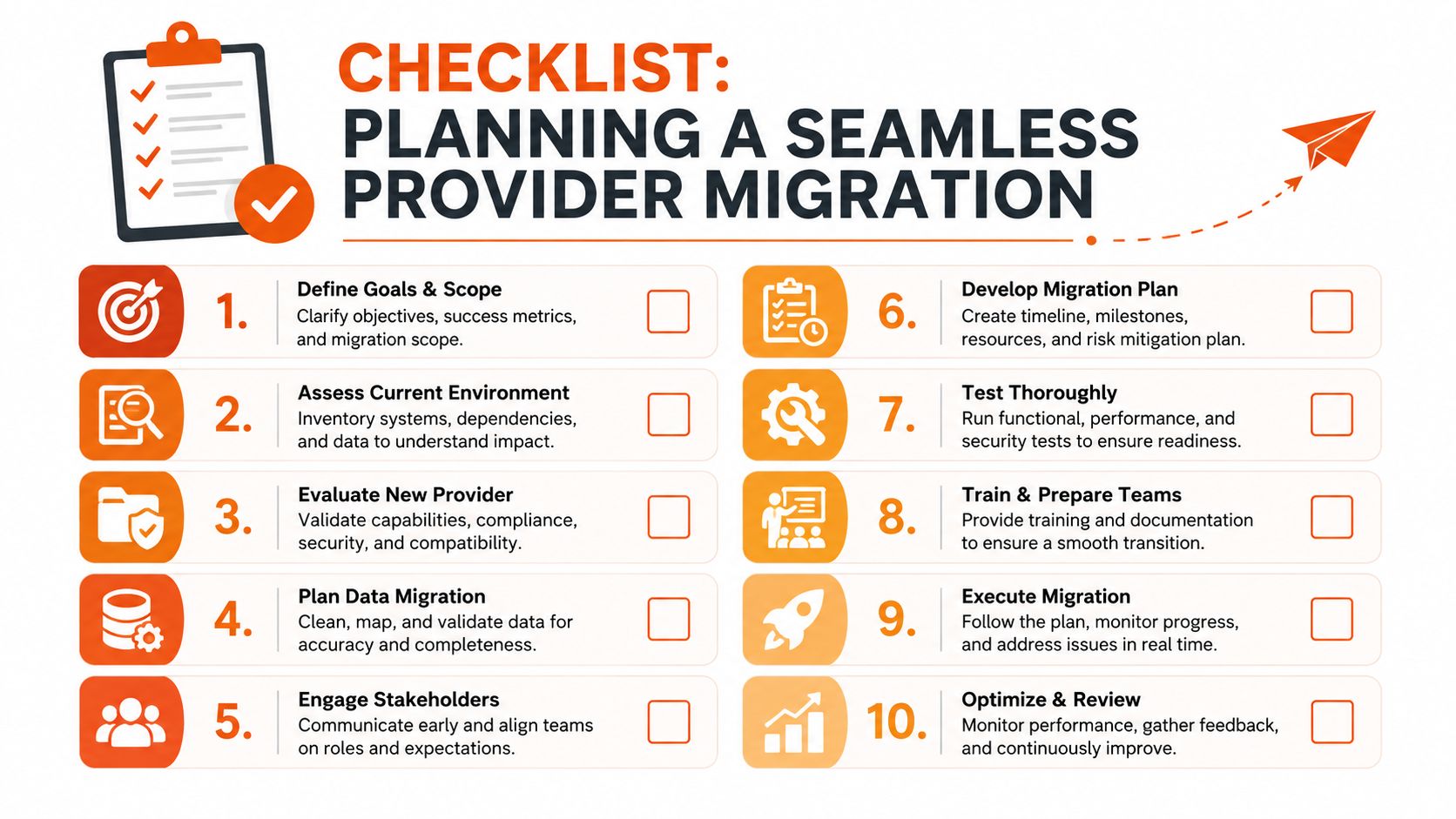
A low-drama migration usually follows a disciplined sequence.
The most common migration mistake is assuming that installation equals readiness. It doesn't. A terminal can be physically present and still be operationally unready if staff haven't practised refunds, failed taps, QR fallback, or bill-splitting scenarios.
Another common error is changing too many variables at once. If the restaurant is also revising menus, changing service flow, or retraining cashiers, the payment migration should be staged carefully so teams can isolate problems.
Restaurants should favour providers that offer guided onboarding and local human support during activation. A migration usually goes wrong in the small moments, not the big ones. Someone needs to answer the phone when the team is standing at the cashier with a queue forming.
By the time an owner reaches the shortlist stage, most providers will sound similar. They'll all promise digital acceptance, modern hardware, and support. The decision comes from how well the offer matches daily restaurant pressure.
A useful local partner should solve three problems at once. The checkout needs to stay fast during peak traffic. The commercial model needs to stay understandable after the first statement arrives. The payout cycle needs to support ordinary cash flow instead of creating more admin.
Use this short filter when comparing options:
The wider market context supports taking this seriously. Independent industry analysis shows digital payments in Singapore reached 92.0% adoption in 2025, while card payments still accounted for SGD 148.91 billion in 2024, including SGD 54.54 billion in credit cards alone, according to MAS information on SGQR and Singapore e-payments. That combination means a restaurant can't choose between card-first or QR-first thinking. It needs both, handled cleanly.
The strongest restaurant POS Singapore choice is usually not the one with the longest feature list. It's the one that reduces friction in service, keeps statements readable, and pays the restaurant on time.
Sambapay provides Singapore restaurants with smart Android POS terminals, in-store card acceptance across major schemes, selected wallet support, transparent blended pricing, and settlement options from as early as T+1 depending on the merchant setup. For operators who want a cleaner checkout flow and a more predictable payment setup, visit Sambapay to review how its in-store payment approach fits restaurant workflows.