
PayNow is Singapore's instant, proxy-based bank transfer system on the FAST rail, and it lets customers pay using a mobile number, NRIC/FIN, UEN, VPA, or QR code instead of a bank account number. It matters to merchants because it moves money account to account through participating banks, not through a card network.
A shop counter can look simple from the customer side and still be messy behind the till. The cashier sees a scan, a customer expects a quick handover, and the business still needs to know who paid, whether the payment cleared, and how that transaction gets matched at day end.
PayNow is best understood as a bank transfer rail, not a wallet. It runs over the Fast And Secure Transfers (FAST) network, which means funds move between participating banks rather than through a closed stored-value system or a card scheme. For a merchant, that difference changes the whole acceptance flow, because the payment is tied to the customer's bank account and a registered proxy, not to a card-present authorisation step.
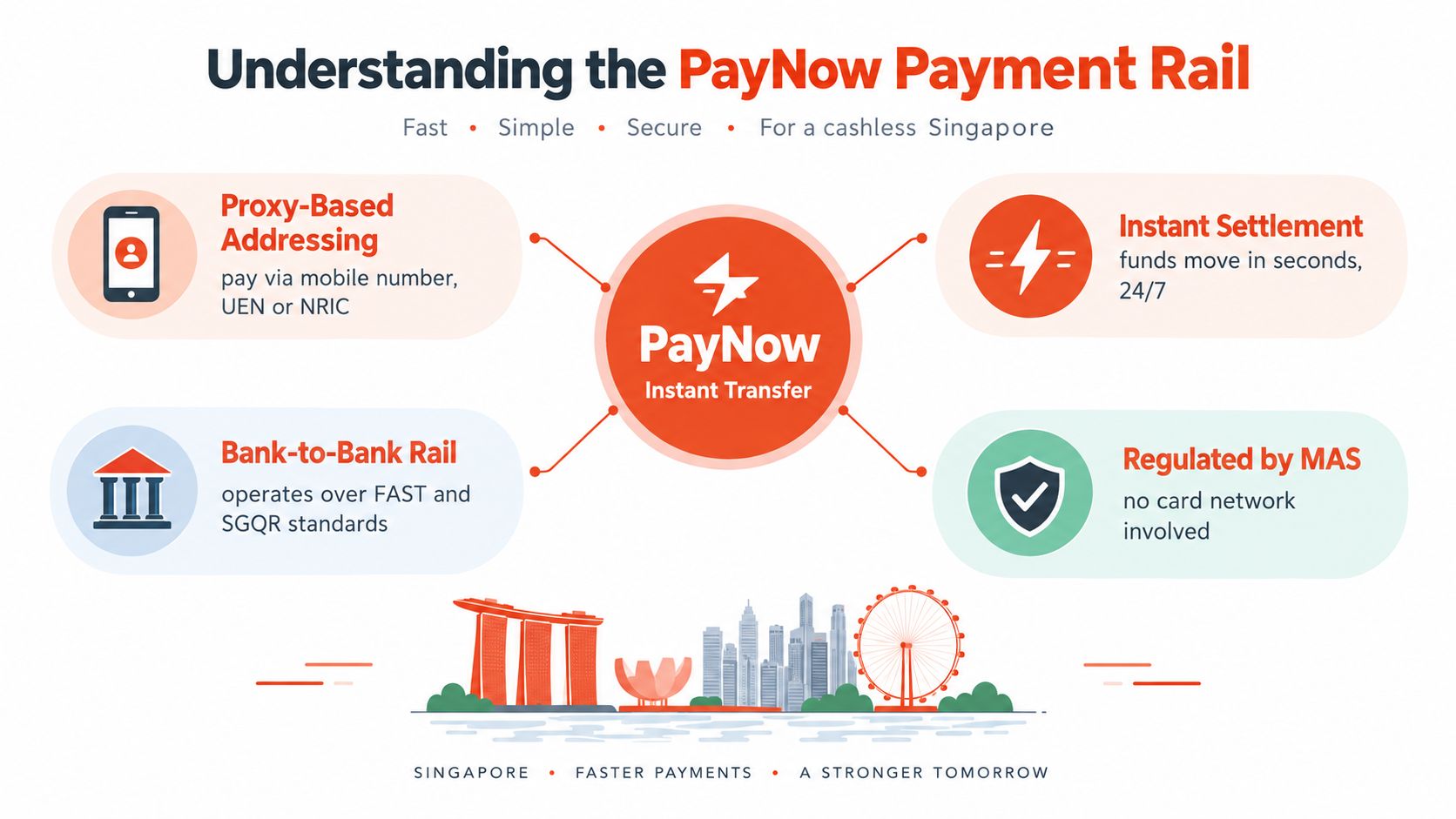
In practical terms, the merchant is not asking for a customer's account number. The payer uses a proxy identifier, such as a mobile number, NRIC/FIN, UEN, VPA, or QR code, and the bank maps that proxy to the destination account. That makes the checkout experience less brittle, because the merchant can present a QR or registered business identifier instead of dictating banking details over the counter.
For SMEs, the important point is that this is an interoperable account-to-account payment rail. It connects ordinary bank apps to business collection flows, so a customer can pay with a familiar banking interface while the merchant receives funds into a bank account already used for operations. That is why PayNow fits retail, food and beverage, services, clinics, salons, and similar environments where staff want fewer steps and cleaner reconciliation. A useful plain-English overview of cashless acceptance in Singapore is also available in this practical payments guide.
Practical rule: treat PayNow as part of the banking stack, not as a loose add-on. If the receiving account, the proxy, and the receipt workflow are not aligned, the counter will feel fast to the customer and chaotic to the back office.
The operational implication is simple. A cashier does not need to collect card details, and the merchant does not need to manually type bank numbers for each sale. The business still needs a clean receiving setup, because the speed of the rail only helps when the receiving account and the payment reference are organised from the start.
Consumers usually experience PayNow as a quick action inside their existing bank app. They scan a QR code or enter a proxy, review the recipient name that appears in the app, and confirm the transfer. The flow feels familiar because it stays inside normal banking interfaces, which keeps the learning curve low for everyday buyers.
The merchant side is less forgiving. A personal mobile number can be used for a simple transfer, but a UEN points the payment at a registered Singapore entity, which is what most businesses need for proper collection and bookkeeping. That matters when staff have to separate business takings from personal funds, match receipts later, and keep the merchant identity consistent across invoices, signage, and bank records.
A customer-facing QR code is not the same thing as a well-managed business receiving setup.
That distinction is why many SMEs eventually move away from ad hoc phone-number collection. A business proxy gives the operation a cleaner identity, and it reduces the risk of staff using the wrong receiving account at the counter. For merchants evaluating whether PayNow should sit alongside other payment methods, the operational question is not “can it be paid”, but “can it be received, identified, and reconciled consistently”. A useful comparison of payment options for Singapore sellers is available in this PayNow and PayLah difference guide.
For larger teams, the receipt process matters as much as the payment itself. One cashier might be serving a walk-in customer, another might be packing takeaway orders, and a supervisor may be checking the day's takings later. If the business uses a personal proxy in that environment, confusion creeps in quickly because the payment identity doesn't clearly reflect the merchant entity.
The cleaner pattern is straightforward. Use a business proxy, print it where customers can see it, and make sure staff know which account should be monitored for incoming payments. That keeps the customer journey simple and gives the business a payment trail that is easier to defend during audits, refunds, or disputes.
The strongest reason SMEs accept PayNow is not novelty, it's operational fit. Customers already recognise it, staff don't need to learn a separate device flow, and the merchant avoids depending entirely on card-present checkout for every sale. MAS has said that four out of five individuals and three out of four active Singapore businesses had adopted PayNow, which makes it a mainstream expectation rather than a niche option (MAS speech).
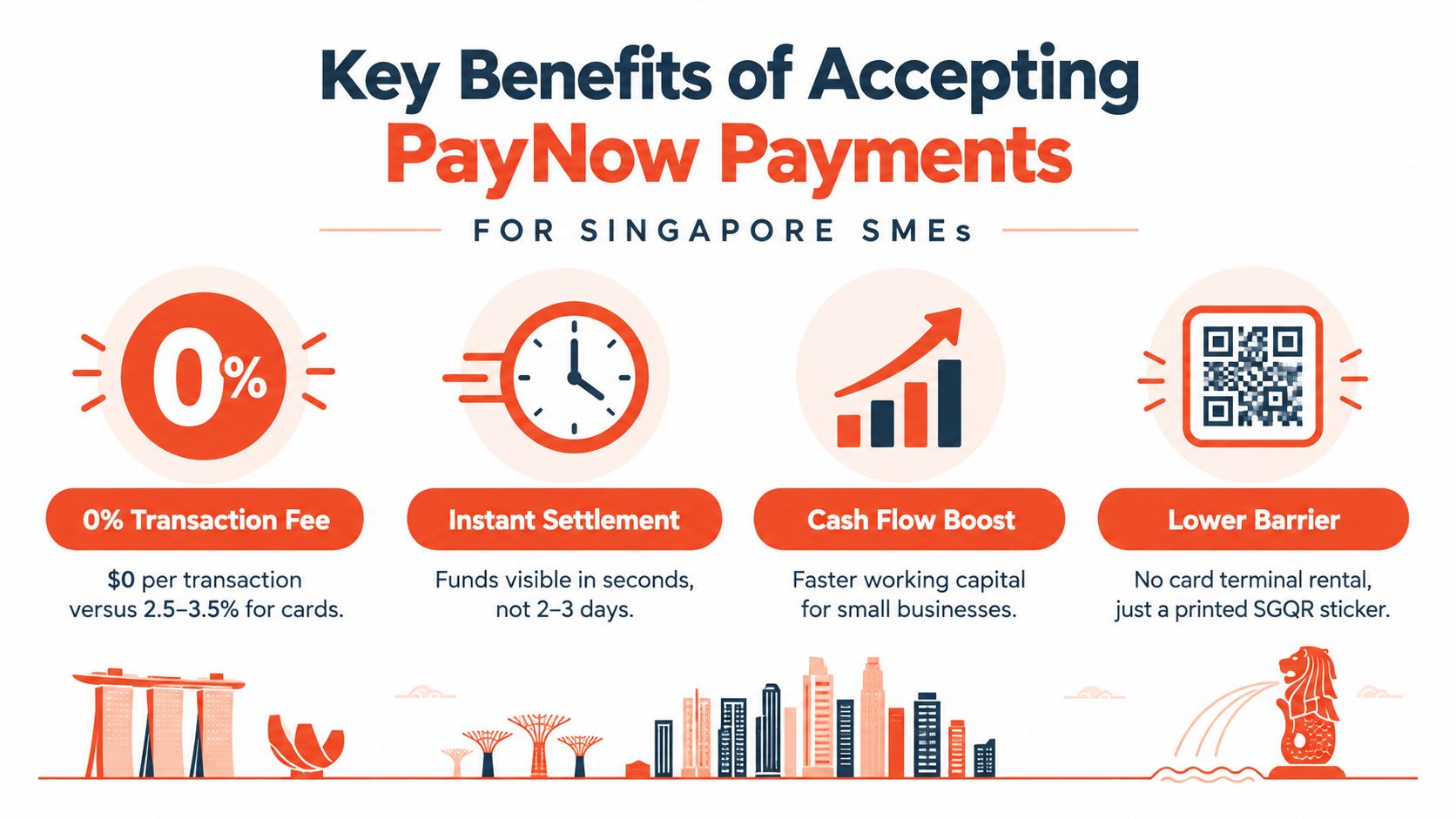
The first gain is speed at the counter. PayNow avoids the card-network authorisation path, so merchants who accept it well can move customers through checkout without waiting on a separate card capture step. That can matter in cafés, clinics, salons, and busy retail environments where queues build when the payment lane becomes a bottleneck.
The second gain is cash-flow clarity. When payment is visible quickly in the banking environment, owners get a better view of the day's takings and can plan replenishment, supplier payments, and staffing with less uncertainty. The third gain is acceptance reach, because customers do not need a special app or stored-value wallet when their bank already supports the rail.
This short video gives a practical look at the customer-side payment moment and helps illustrate why merchants often keep PayNow beside card acceptance rather than treating it as a replacement.
Operational takeaway: the real value is not just that PayNow is available. It's that customers recognise the flow, and the merchant can capture payment without changing the basic banking relationship.
There is also a cost and hardware angle. A PayNow flow can be lighter than a full card acceptance stack, especially for merchants who want a printed SGQR sticker at the counter and a simple receiving account behind it. That does not remove the need for good process, but it does reduce the number of moving parts in low-margin businesses where unnecessary friction quickly becomes expensive.
Static QR acceptance and POS-integrated acceptance solve different problems. A printed SGQR sticker is cheap and easy to deploy, but staff usually need to check incoming payments separately in a banking app. That can work at low volume, yet it becomes awkward when the queue is long and customers expect immediate handover.
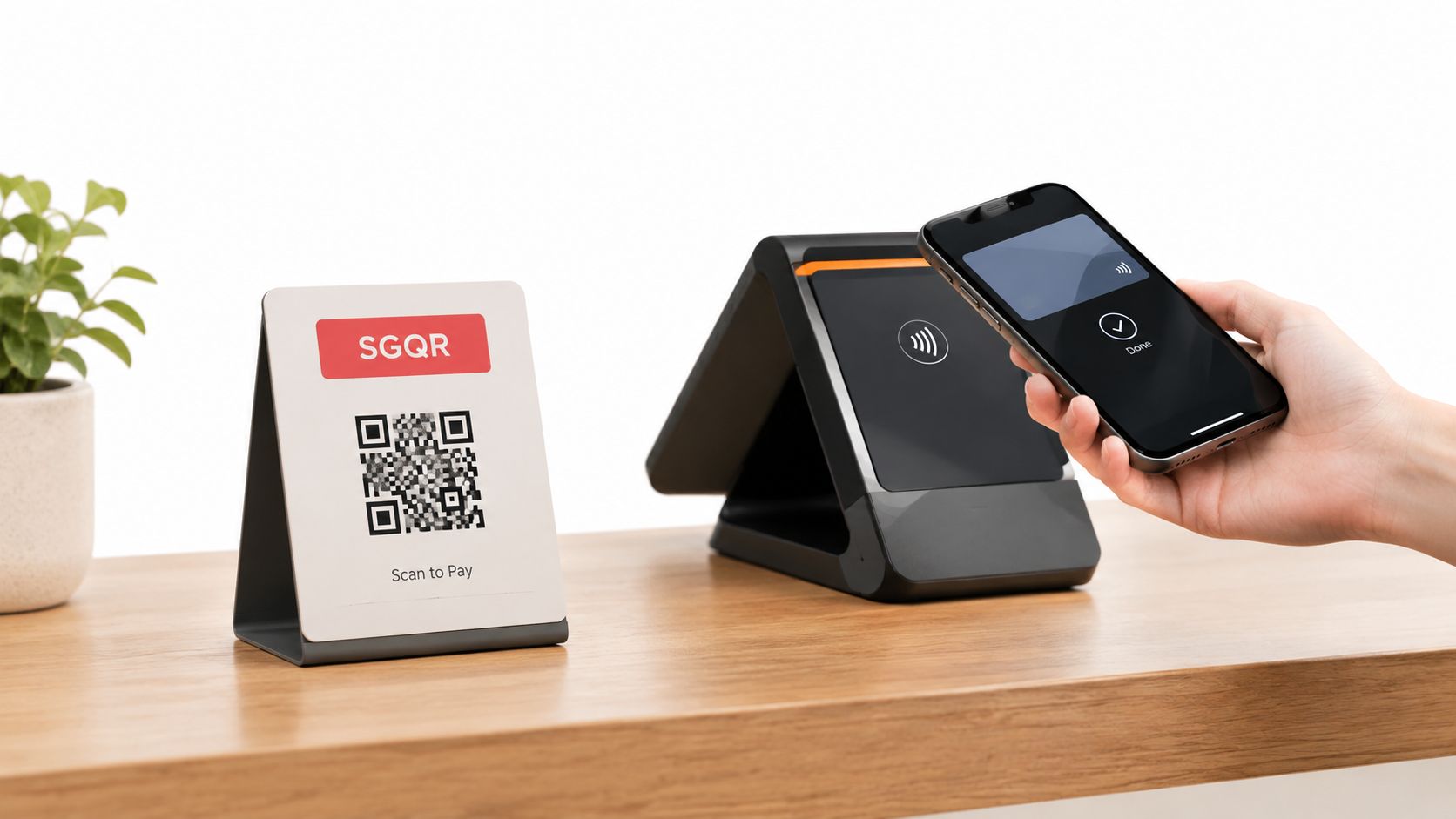
With a static QR, the business typically posts one code for all payments, then relies on staff to verify whether the transfer arrived. That is fine for a small shop with low traffic, but it creates avoidable pressure at the counter because the cashier is now part payment clerk, part order taker, and part reconciler. If the wrong amount is sent, or the wrong account is checked, the error often only appears after the customer has already left.
A more controlled setup uses a POS terminal to create a transaction-specific QR and confirm receipt within the checkout workflow. Modern Android POS terminals can do this by linking the PayNow acceptance step to the sale amount and then printing the receipt only after the payment is confirmed. That keeps staff from switching between devices and lowers the chance of releasing goods before settlement is visible.
For a merchant choosing hardware, the key question is not whether a QR code exists. It's whether the payment is integrated into the same workflow as the item scan, total calculation, and receipt print. If that chain is broken, the team ends up manually reconciling what should have been automated. A practical example of QR acceptance setup is outlined in this PayNow QR code guide.
Counter rule: don't let a payment method add another screen for staff to watch. If the cashier has to leave the checkout flow to verify every transaction, the setup is too manual for peak hours.
One option in the Singapore market is Sambapay, which offers PayNow acceptance through smart Android POS terminals alongside card acceptance. The point is not the brand name, it's the workflow, one terminal, one counter view, and a clearer path from sale to settlement.
Instant transfers feel safe because they move quickly, but speed doesn't remove fraud risk. Singapore authorities reported 19,665 scam cases and S$456.4 million in losses in the first half of 2025, and they identified internet banking and PayNow as primary methods for moving scam proceeds (SPF, MAS, IMDA and GovTech joint release). That makes checkout verification a business control, not just a customer-service issue.
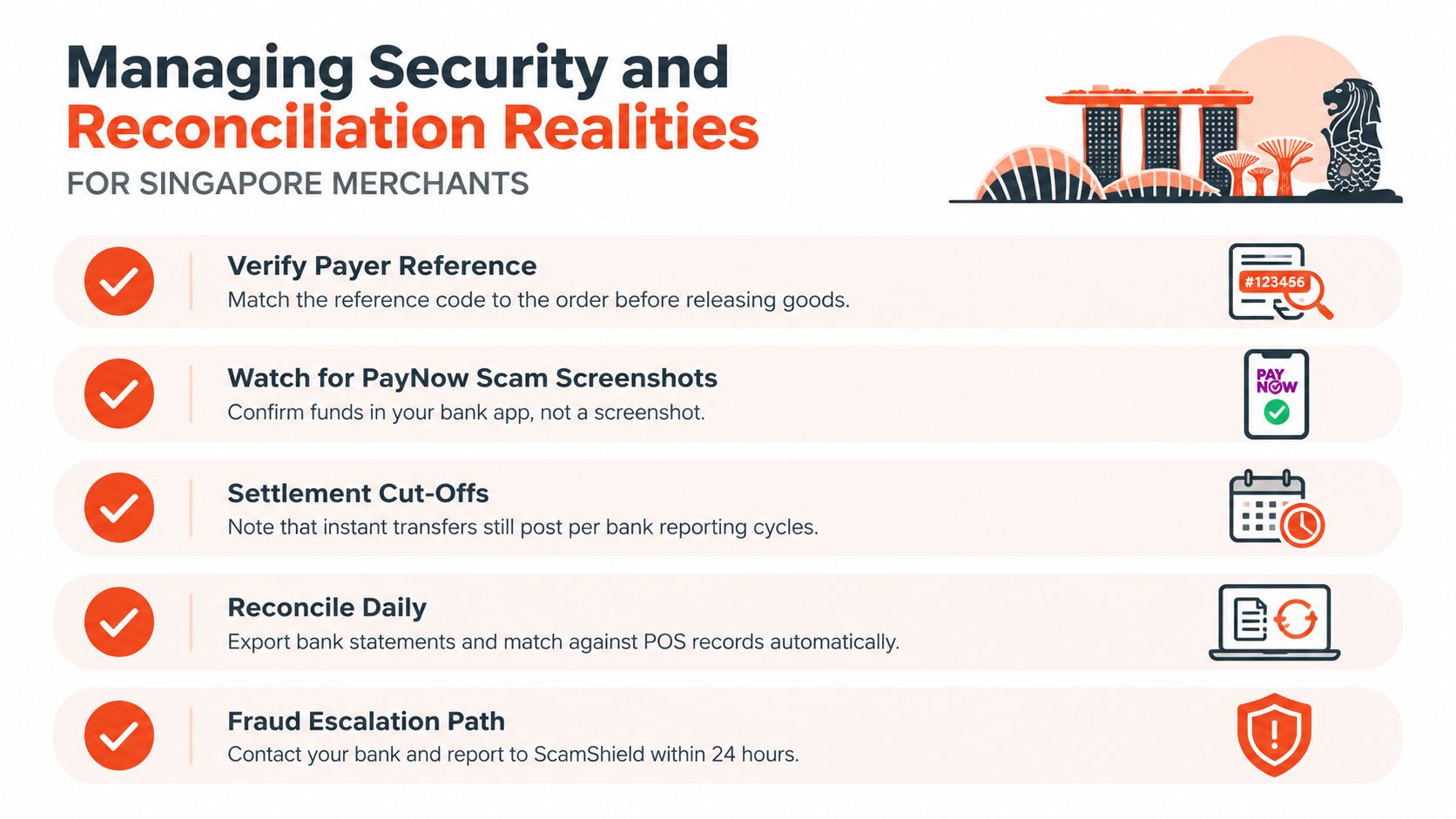
A transfer screenshot from a phone is not proof of receipt. Staff should confirm funds in the receiving system, check the payer reference where available, and avoid handing over goods until the payment is visible in the merchant's records. Police advisories have also warned that QR scams and convincing account names can mislead customers, especially because PayNow account names can be changed easily.
For reconciliation teams, automation helps. Businesses that want cleaner matching between incoming transfers and sales records often look at tools for automating transaction matching, because manual cross-checking gets messy once the volume rises or the same amount appears multiple times in a day.
Daily discipline matters more than one-off fixes. Staff should export bank statements, match them against POS records, and keep a clear escalation path for wrong transfers, duplicate scans, or delayed postings. If a customer pays the wrong UEN, the business needs a documented way to trace the reference, confirm the payer, and decide whether the amount should be treated as an exception.
Never release goods on the strength of a screenshot alone.
That rule is blunt because the risk is blunt. Card-style dispute handling doesn't work the same way in account transfers, so merchants need stronger front-line checks and cleaner records behind the scenes. The safest operators are the ones who make verification part of the checkout habit, not an afterthought for accounting.
PayNow works best when it sits inside one payment operating model, not as a separate island. Many Singapore SMEs already accept cards and selected digital wallets, so the challenge is giving the business one daily view of sales, settlements, and exceptions instead of forcing staff to check different portals for different rails. That is where the day-end process starts to matter more than the headline payment method.
Merchant teams should build a simple routine. Capture the payment reference at the counter, reconcile PayNow receipts against the POS totals, and keep the bank account, the merchant ID, and the sales record aligned. If the business also uses accounting software, the setup should support clean data export and controlled posting, which is why integrations such as integrate accounting tools securely deserve attention before rollout.
A merchant comparing providers should ask how PayNow is recorded, whether UEN and payer identifiers are captured automatically, and how quickly exceptions can be traced. Settlement timing matters too, because an apparently simple payment method can still create back-office friction if the records arrive late or need heavy manual checking.
A practical evaluation also looks at operational support. The business should know who helps if a QR fails, if the wrong account is scanned, or if a customer raises a dispute at the counter. Those are everyday issues, not edge cases, and the provider's answer should be clear enough for a cashier to follow without improvisation.
PayNow is now part of the core Singapore payments stack, but it only stays useful when the merchant treats it as an operational process, not a sticker on the counter. The businesses that get the most value are the ones that tie acceptance, reconciliation, and staff training together from the start.
If a Singapore SME wants PayNow to run cleanly beside card acceptance, Sambapay can supply the POS workflow, terminal setup, and day-to-day support needed to keep the counter moving. Visit Sambapay to review how its in-store payment setup fits PayNow alongside card payments and daily reconciliation needs.