
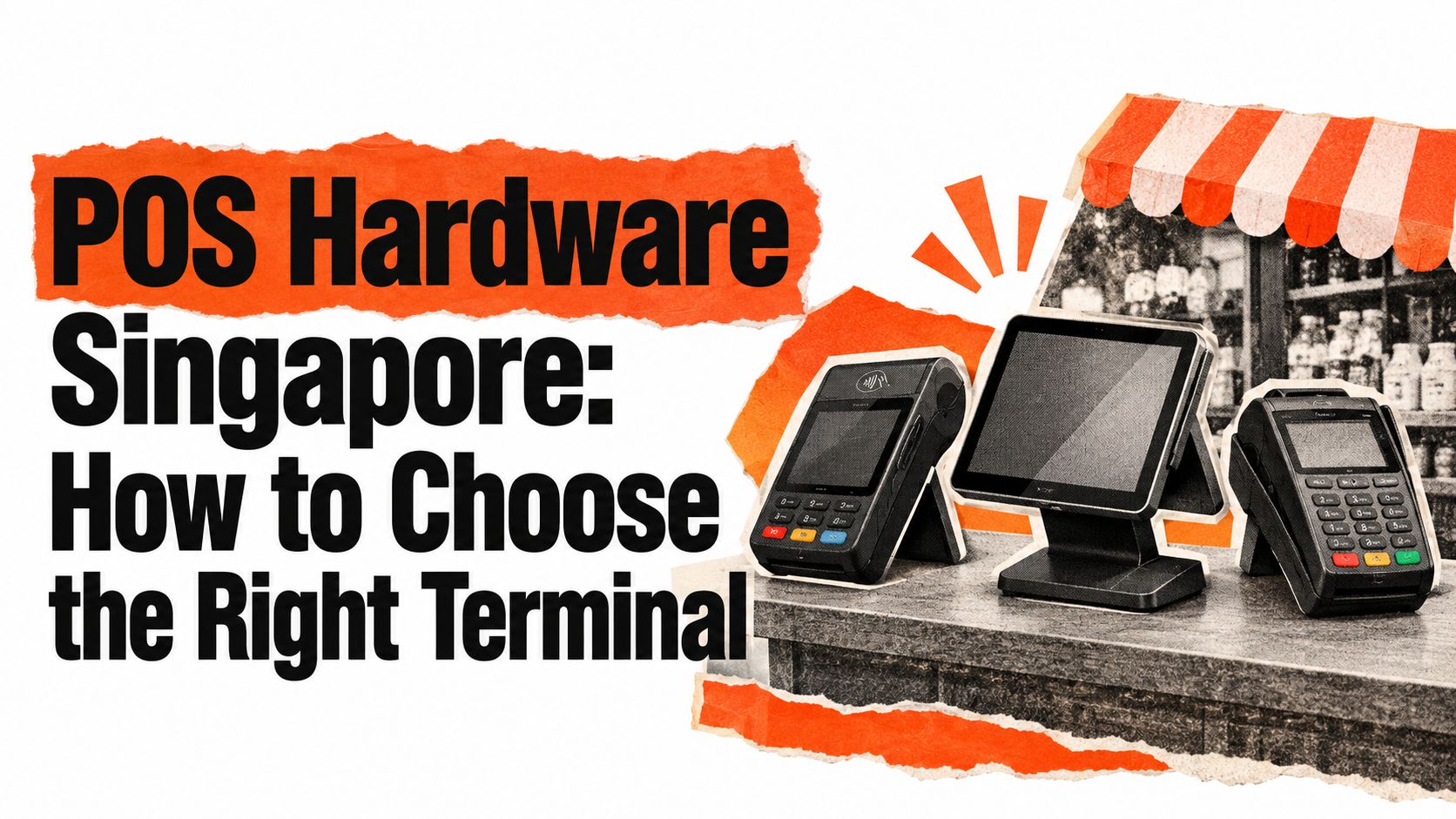
Singapore recorded 2.286 billion card payments worth S$148.909 billion in 2023, according to the payment statistics summarised in the Singapore Department of Statistics household payment study. For an SME choosing POS hardware in Singapore, that scale puts the buying decision in perspective: the terminal isn't just a screen on the counter. It's the customer-facing part of a payment service that must approve transactions, record refunds and deliver usable settlement records.
A larger display won't fix unreliable connectivity. More payment logos won't fix separate reconciliation routines. The better purchase is the terminal and acceptance service that fit the merchant's actual checkout, including the awkward moments when a payment stalls or a customer requests a refund.
Most Singapore SMEs choose between countertop terminals, portable terminals and Android smart POS terminals. Countertop devices suit fixed tills, portable devices take payment to the customer, and smart Android terminals can run approved business apps alongside payments.
These categories overlap. An Android terminal may also be portable, so the decision should start with where staff collect payment, not the operating system.
| Business | Likely terminal type | Connectivity to check | Why it fits |
|---|---|---|---|
| Retail shop or boutique | Countertop or Android smart POS | Wi-Fi with 4G backup | Fixed till with room for printer and cash drawer, handling multiple tenders |
| Restaurant or cafe | Countertop plus a portable unit | Wi-Fi or Ethernet at the fixed station, 4G on the portable | Fixed station for peak hours, portable for queues and counter orders |
| Beauty salon or spa | Portable or Android smart POS | Wi-Fi or 4G | Therapist or reception staff can take payment at the chair |
| Medical or dental clinic | Countertop at reception plus portable for treatment rooms | Ethernet or Wi-Fi with fallback | Fixed desk for checkout, portable for bedside or treatment rooms |
| Gym or fitness studio | Portable or Android smart POS at the front desk | Wi-Fi with 4G backup | Walk-in and membership payments at a front desk that moves |
| Market stall or event | Portable terminal | 4G | Mobility without a fixed power or network point |
A fixed terminal avoids battery management but anchors staff to the till. A portable device offers flexibility, but someone must own charging, storage and handovers. An app-capable terminal only removes another device when the required booking, stock or queue software is supported.
Retailers should also separate payment needs from fulfilment needs. Material Handling USA's guide to warehouse essentials for online retailers provides useful context for organising stock and packing areas, tasks that a payment terminal alone can't solve.
Practical rule: Where most sales happen at a fixed till, equip that position properly before adding roaming devices.
Buyer test: Map the payment positions, mark where staff need mobility, and list the apps that need to run on the terminal. Check signal strength at each actual location, including treatment rooms and sheltered counters, before choosing Ethernet, Wi-Fi or 4G.
A payment terminal affects queue speed through more than its processor. Staff entry, card or wallet recognition, network response and a clear approval message all shape how long a customer waits. For a Singapore SME, consistency during a rush matters more than the fastest result in a quiet demonstration.
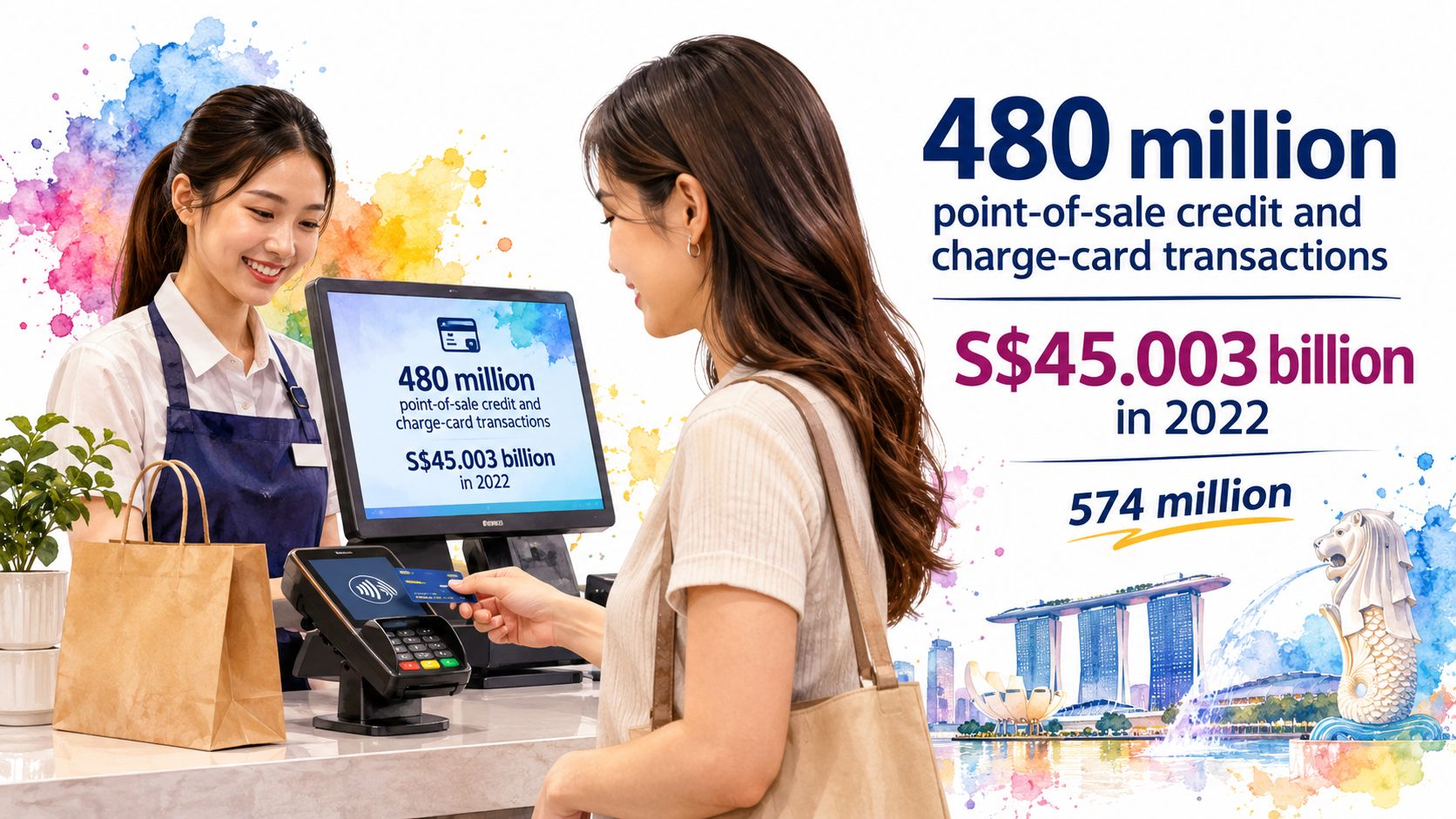
MAS recorded approximately 346 million POS credit and charge-card transactions worth S$27.2 billion in H1 2025 in its H1 2025 retail-payment statistics. The figures imply an average transaction size of about S$79 across those transactions. That is an economy-wide average, not a sales forecast for a particular café, clinic or shop.
Time the full sequence from staff entering the amount to the terminal displaying an outcome. A fast reader can still slow the queue if staff re-enter amounts, work through unnecessary prompts or cannot tell whether a transaction is approved.
A café provides a simple example. If staff wait for each receipt to print before starting the next sale, receipt handling becomes part of the bottleneck. Check whether the terminal lets staff continue the workflow without delaying the next customer.
| Spec | What to check | Why it matters | Simple test |
|---|---|---|---|
| Contactless (NFC) reader | Consistent reading of cards, phones and watches | Failed taps cause retries and queues | Present each payment form at the marked antenna from normal customer positions |
| Approval time | End-to-end time from tap to approval | The customer waits on this step | Time repeated approvals and record slow cases, not just the fastest |
| Connectivity | Wi-Fi, Ethernet or 4G, and behaviour when the link drops | Network loss can stop acceptance without fallback | Switch off Wi-Fi during an agreed test sale and check recovery |
| Screen | Readability in shop lighting and touch response | Customers confirm amounts and staff read status | Check at arm's length under the shop lights |
| Printer or digital receipt | Paper, email or SMS options and print behaviour | Receipt handling can hold up the next sale | Run consecutive receipts and check whether staff can continue selling |
| Battery | Usable endurance under transaction load | Portable units can stop working mid-shift | Simulate a full shift's transactions, including printing and idle periods |
Test battery performance with the settings staff will use. Include screen brightness, cellular connectivity and receipt printing, and check that charging does not obstruct service.
Digital receipts need a quick workflow too. Staff should not have to collect an email address before completing every payment, and customers should be able to decline a receipt without holding up the queue.
A reliable approval is more useful than a fast animation. Staff need to distinguish approved, declined and unresolved transactions immediately.
Buyer test: Record tap-to-approval times under the shop's normal network conditions, including busy periods. Compare the 95th-percentile result with the fastest result, test recovery after an interrupted connection, and estimate daily transactions and peak-period demand before setting speed and battery requirements.
Cards alone don't define a complete checkout. MAS and the Association of Banks in Singapore report approximately S$154 billion in consumer PayNow payment value and S$147 billion in business PayNow payment value during 2025 in the PayNow Gen2 Phase 1 report, which also places digital wallets and account-to-account payments at about 48% of Singapore retail consumer-to-business commerce value.
The operational question isn't how many logos fit on a terminal sticker. It's whether staff can accept the methods customers request without maintaining unrelated payment routines.
A merchant's shortlist may include Visa, Mastercard, UnionPay, American Express, Alipay, WeChat Pay, Apple Pay, Google Pay, GrabPay and PayNow. This is a checklist for confirmation, not a claim that every terminal or merchant agreement includes them.
Phone-based card wallets and account-transfer methods don't necessarily follow the same processing or refund path. The comparison of POS payment-method acceptance can help merchants frame those questions, but a live demonstration should settle them.
An integrated workflow should produce an explicit tender label, a transaction ID, a timestamped receipt and an export that distinguishes payment methods clearly. It should also make the difference between gross sales, refunds, fees and money due understandable to whoever closes the till.
Separate systems aren't automatically unsuitable. A merchant may accept a standalone QR arrangement if staff can verify payment and reconcile it reliably, but that extra work belongs in the buying decision.
Buyer test: Give the trial records to the person who normally reconciles takings. If that person can't explain the difference between sales and settlement without vendor assistance, the workflow needs more work.
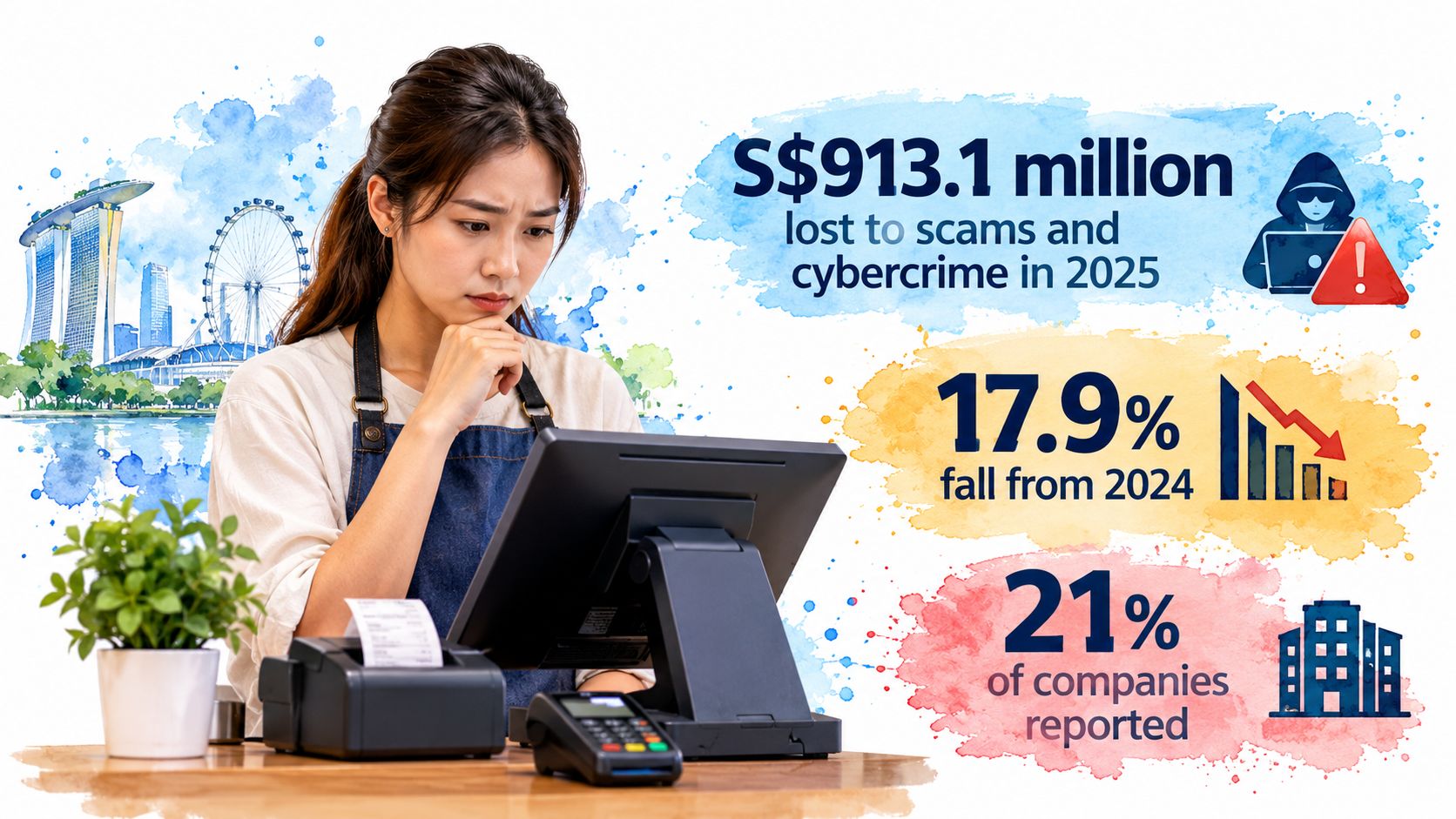
Singapore lost S$913.1 million to scams and cybercrime in 2025, despite a 17.9% decline from 2024, according to the Eftsure Payment Fraud Index. Those are national losses across scams and cybercrime, not losses attributed specifically to POS terminals.
The distinction matters. A certified terminal isn't the same as a secure checkout operation. Device protections don't decide which employee can issue refunds, whether customer information is visible at reception, or what staff do when an approval remains unresolved.
| Sector | Main risk | Control to set up |
|---|---|---|
| Retail | Split tenders and refunds used to move money | Manager approval for refunds and a log matching every refund to its receipt |
| F&B | Connection drop at peak hour | Written outage procedure and a second network path, such as 4G |
| Clinics | Payment details visible at the front desk | Customer-facing card screens, minimal receipt detail and role-based staff access |
| Salons and spas | Shared logins and voids after treatment | Individual staff logins with limits on voids and refunds |
| Gyms and studios | Recurring charges and unattended payment points | Membership consent records and restricted access to unattended points |
An outage procedure must distinguish recording an order offline from accepting a payment without online authorisation. Those aren't interchangeable capabilities, and staff shouldn't assume that an offline order screen means the card payment is approved.
A second connection helps only if staff know how to activate it and check the transaction outcome. After an interrupted request, the first action should be to check status through the approved workflow, rather than immediately charging the customer again.
Security controls need named owners. The manager responsible for refunds should review exceptions, while the person responsible for devices should track updates, physical condition and replacement arrangements.
Shared credentials make those responsibilities harder to enforce. Staff should have permissions suited to their duties, and departing employees' access should be removed from both the terminal and any connected merchant portal.
Control check: Every unusual payment outcome needs a defined next action and a person authorised to take it.
Buyer test: Select the relevant sector row and rehearse its failure scenario during a quiet period. Confirm that staff can identify the problem, preserve the transaction record and escalate it without improvising; then assign an owner to any missing control.
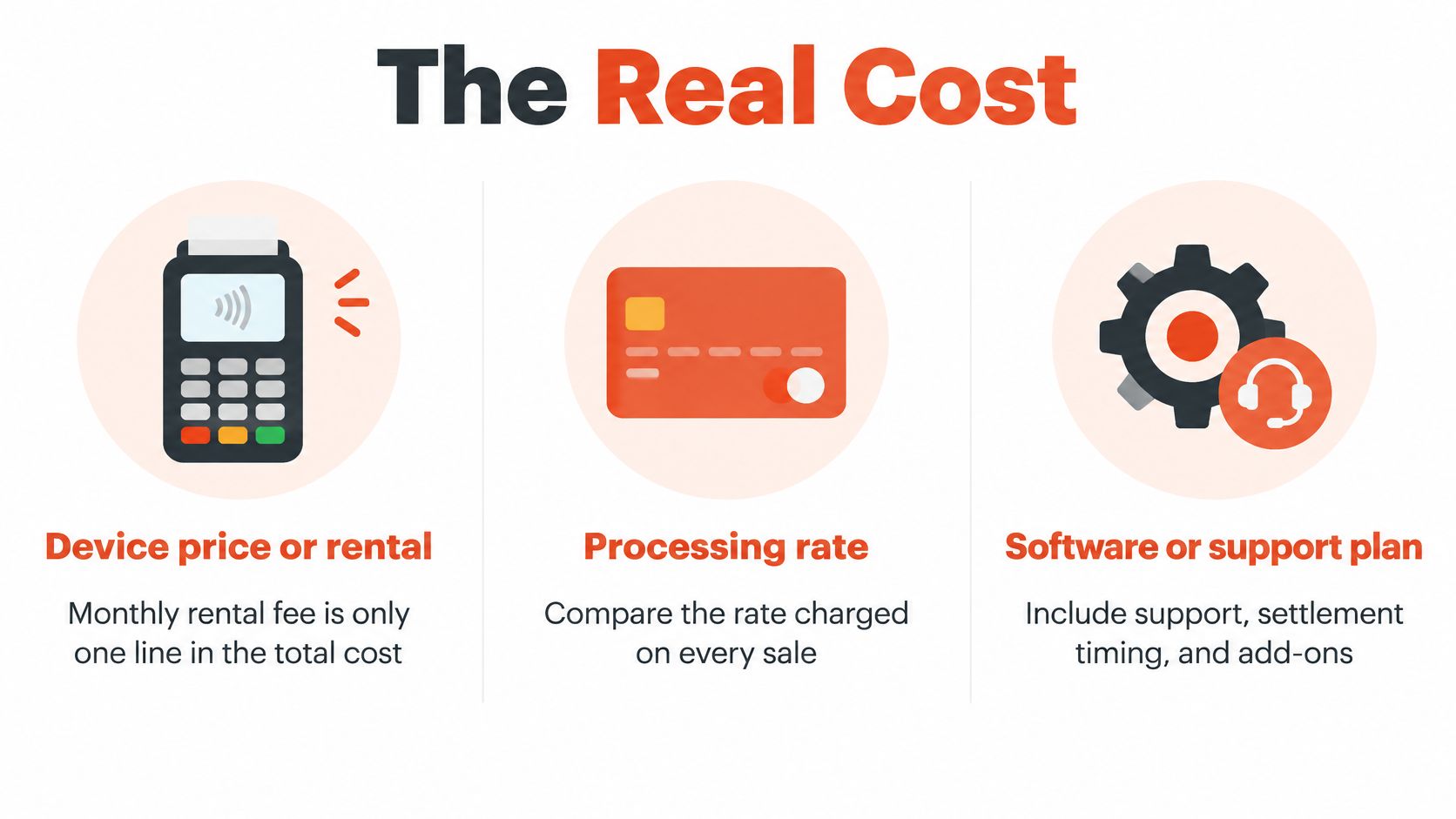
The monthly rental fee is only part of the bill. In a 2026 Singapore SME survey reported by Singapore Business Review, 33% of SMEs cited high fees, 32% slow settlement and 31% poor mobile optimisation as leading operational problems.
A newer device won't fix unclear pricing or delayed payouts. A useful comparison includes processing charges, software, support, replacement obligations and the cash-flow effect of settlement timing.
| Factor | Buy outright | Rent or lease |
|---|---|---|
| Upfront cost | Full device price paid at purchase | May reduce the initial device payment; check deposits and setup charges |
| Ongoing cost | Processing fees plus software or support | Device rental on top of processing and applicable service fees |
| Hardware replacement | Repair or upgrade costs unless covered by warranty or support | Replacement only to the extent covered by the agreement |
| Contract length | Device purchase doesn't remove processing-agreement obligations | Hardware and pricing package may carry a minimum term |
| Exit | Ownership doesn't guarantee compatibility with another provider | Return requirements and early-termination charges need checking |
| Best for | Stable location and a long operating horizon | Pilot operation, shorter horizon or uncertain demand |
Use the same operating horizon and expected payment mix for every quote. Add the purchase price or cumulative rental, expected processing fees, fixed transaction charges and necessary add-ons.
Include installation, training, connectivity and accessory costs where applicable. A low headline rate can become less attractive when the merchant adds the services required to operate normally.
The guide to reducing card-transaction fees provides a useful starting point for preparing a quote request around actual ticket size and monthly volume. A blended estimate should still disclose assumptions about card and wallet mix.
Settlement timing belongs beside price, not beneath it. The quote should identify the first expected payout, regular settlement schedule, deductions and any circumstances that could hold funds.
Buyer test: Put competing written quotes into the same spreadsheet and calculate costs using identical sales assumptions. Then compare a quiet trading period with a busy one, and obtain written answers on early exit, replacement coverage and support before treating the cheapest total as the best value.
A controlled cutover needs a rollback plan, not just an installation appointment. The practical store POS switching guide can help organise responsibilities before the existing service is disconnected.
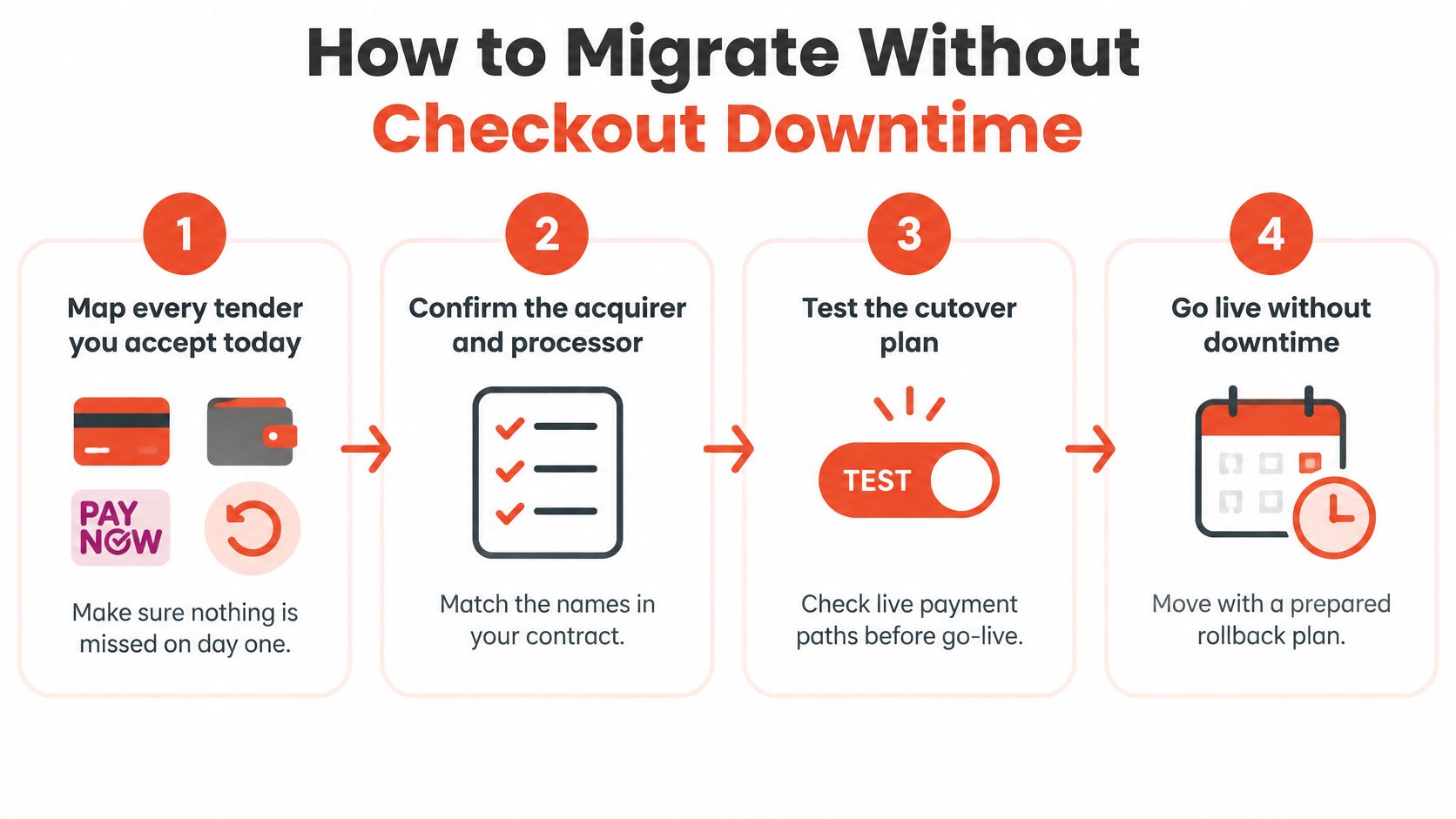
Buyer test: Have the opening-shift employee complete the cutover rehearsal without the installer directing every action. Keep the old service active until the nominated manager signs off payment acceptance, reconciliation and the first payout.
The strongest shortlist combines terminal fit, sector controls and total operating cost. A device that performs well in a showroom can still be unsuitable for a crowded reception desk or a cafe with unreliable indoor signal.
Restaurant operators comparing broader ordering and service workflows can also compare restaurant POS systems using 10Seat's guide. Payment acceptance should be assessed alongside those workflows, not confused with the entire restaurant system.
Sambapay is a Singapore-based POS payments company and an authorised Independent Sales Organization of Fortune 500 global payment infrastructure providers. Its team is based in Singapore, and its local support team can assist with terminal troubleshooting, replacement or configuration.
Those facts make Sambapay an option to assess, not a reason to skip the comparison. Written service commitments should carry more weight than an attractive device photograph or a general promise of responsive support.
Final buyer test: Gather competing written quotes, run a trial sale and request a demonstration of the awkward cases, not only a successful tap. Sign only when the written terms, trial results and operating checklist agree.
Sambapay offers POS payment solutions for Singapore SMEs, supported by a local team that can assist with terminal troubleshooting, replacement and configuration. Visit Sambapay to discuss the business's checkout layout, payment requirements and migration plan, and request written terms before choosing a terminal.